



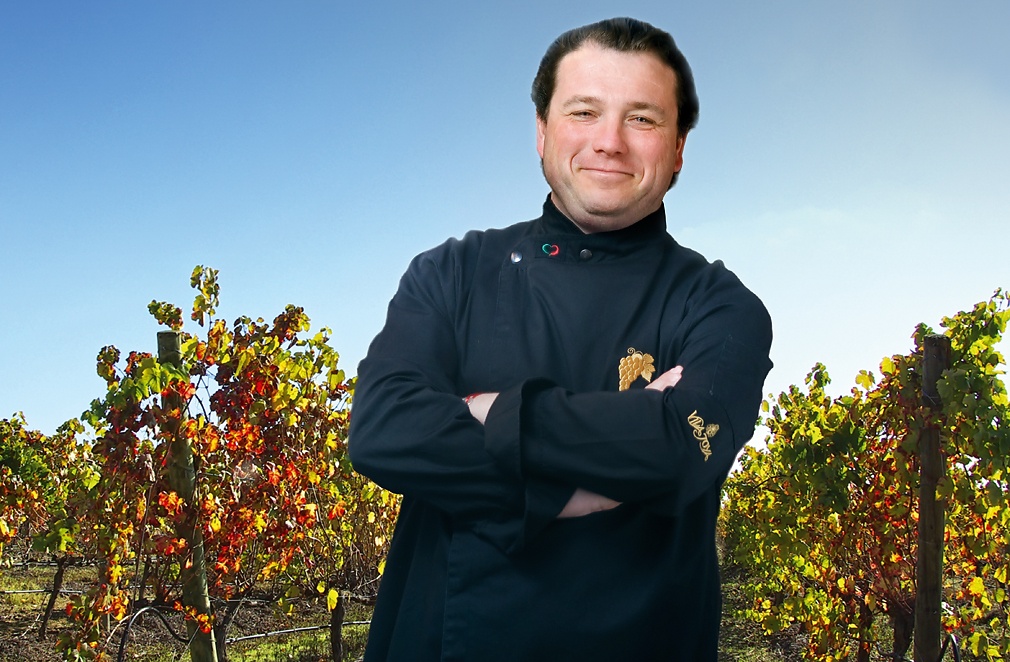
Arnaud Vallet
Arnaud Vallet brings a Frenchman’s expertise to Vila Joya’s internationally renowned wine cellar. Nevertheless, it is all about promoting Portuguese grapes

Arnaud Vallet
Vila Joya
Portugal

It was Arnaud Vallet’s schoolteacher who first suggested he might like to study hotel management, which then led on to his becoming a sommelier.
ARNAUD VALLET was born and bred in Burgundy. Growing up, he was used to eating good products from the farm, and to drinking wines from a good region. He would cook a lot for his family, partly out of enjoyment, partly out of necessity. At a parent-teacher meeting when he was about 15 years old, it was suggested that he might consider studying hotel management, which he did, for three years, covering subject areas such as cooking, service and housekeeping. He also learnt a bit about wine, with some very basic tastings. Luckily, for this, he had an excellent teacher from whom his passion was ignited, and who helped him get in to one of the most renowned and oldest sommelier training academies in the country.
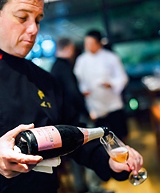
After graduating and spending some time travelling about and working in France, Switzerland and Italy, Vallet finally settled in Portugal, where he has been chief sommelier at Vila Joya since 2007. The wine cellar boasts around 12,000 bottles of the best Portuguese and international wines. Nevertheless, Vallet is strict in that he will only recommend Portuguese wines, unless his customers specifically request otherwise. As a student, he learnt that if you are in a certain region or country, you must allow visitors to experience the local products wherever possible. That said, he believes it is critical to choose a wine to match the food, rather than to pick a wine because of its name or renown. This sometimes leads to his pairing relatively unknown or undervalued wines in surprising ways.
In 2012, he was voted Sommelier of the Year by the Portuguese magazine Wine.
In a similar way to our visual memories, Vallet explains that he has developed a memory of tastes, which organises precise descriptions and flavours in a mental archive. ‘The important thing about wine,’ he says, ‘is what the taste takes you back to, what image from your childhood it brings to your mind.’



