Quality over quantity:
Portuguese Gold
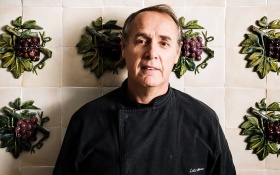
Burgundian born Arnaud Vallet is Executive Sommelier for TASTE PORTUGAL 2014/15. Leaving his homeland for the lure of the Portuguese shore, he fell in love with both the country and its culture, and especially its wine.

‘Portugal is a country of winemakers who favour quality over quantity.’
WHEN ONE THINKS of high quality wine and knowledgeable experts, one probably thinks first of France. And, indeed, Arnaud Vallet was born and bred in Burgundy, considered by the nation to be the best French region for food and wine. Nevertheless, having been based in the Algarve for seven years now, he has put down roots and feels inclined to stay on the Iberian Peninsula. It seems his new countrymen are keen to keep him too, since he was voted Sommelier of the Year in 2012 by the magazine Wine.
Growing up, Vallet was used to eating good products from the farm, and to drinking wines from a good region. He would cook a lot for his family, partly out of enjoyment, partly out of necessity. At a parent-teacher meeting when he was about 15 years old, it was suggested that he might consider studying hospitality, which he did, for three years, covering subject areas such as cooking, service and housekeeping. He also learnt a bit about wine, with some very basic tastings. Luckily, for this, he had an excellent teacher from whom his passion was ignited, and who helped him get in to one of the most renowned and oldest sommelier training academies in the country. Vallet remained in France until he was nearly 30, at which point he was caught by the travel bug. Initially his voyages were principally for leisure, but then he realised it would be possible to combine work and pleasure. And so he went on to Switzerland and Italy, learning more about wine along the way. ‘I like being home in France,’ Vallet says, ‘but I also like visiting new places, learning new things and meeting new people.’
So how did he end up in Portugal? ‘Well, you know somebody who knows somebody who knows somebody,’ Vallet laughs. Through friends, he was put in touch with Vila Joya, and, after a few months of negotiation, he travelled out for an interview which led to his appointment as sommelier. The rest, as they say, is history. ‘It’s a great location and one of top three restaurants in Portugal. Why wouldn’t I stay?’ The wine cellar is home to around 12,000 bottles of the best Portuguese and international wines. Nevertheless, Vallet is strict in that he will only recommend Portuguese wines, unless his customers specifically request otherwise. As a student, he learnt that if you are in a certain region or country, you must allow visitors to experience the local products wherever possible.
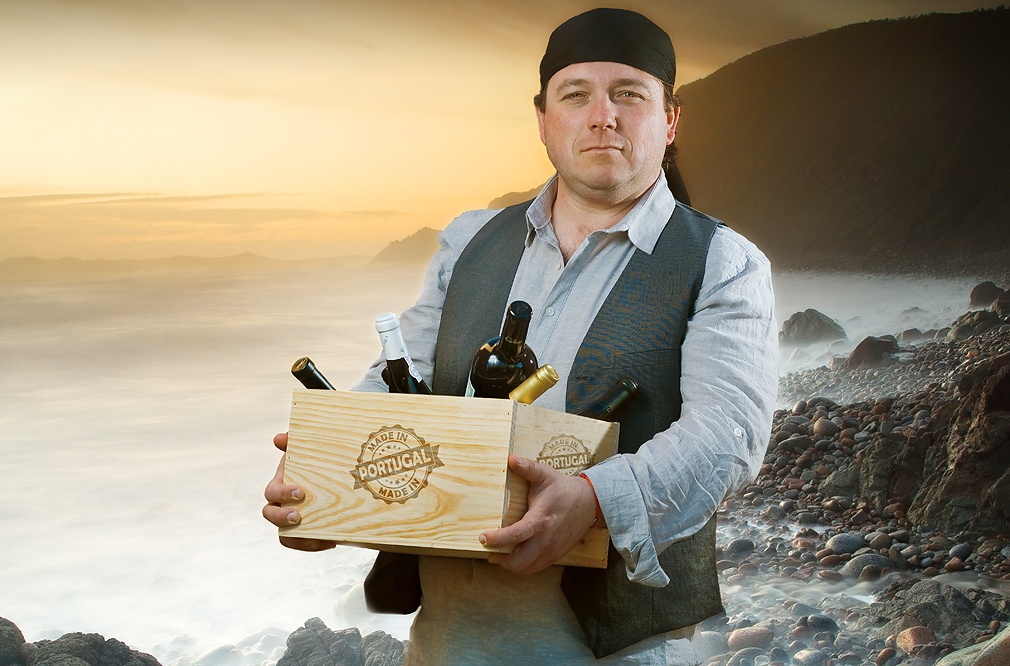
The main USP of Portuguese wines, as Vallet explains, is that Portuguese winemakers use Portuguese grapes. While Cabernet Sauvignon and Chardonnay grapes have become fairly ubiquitous across the globe, Portugal, with its varied and difficult – but often favourable – climate and terrain, would not lend itself to these grapes. Instead, Touriga Nacional and Encruzado are the basic red and white grape varieties which exemplify Portuguese winemaking. ‘There is something really traditional and special about using these grapes,’ says Vallet, who had himself never tasted Encruzado before arriving in Portugal. ‘Portuguese wines are not known so well outside of Portugal,’ he explains. ‘Exportation is difficult for Portuguese winemakers because they favour a small production of quality. The exported Portuguese wines, such as Mateus, are mass produced in vast quantity and are simply not comparable.’ Only about 5-10% of the winemakers Vallet uses in Vila Joya export their wines, some maybe sending 10 or 20 boxes to good restaurants in London or Paris, but that’s all. Portugal is a country of winemakers who favour quality over quantity.
In addition to production issues, Vallet explains that it’s also a matter of the wine not transposing well, a problem for which he has personal anecdotal evidence. ‘Portugal is not seen as the best country for producing rosé, but the funny thing is, if you’re sitting on the beach in the Algarve, eating a piece of fresh fish, just grilled, with a tomato salad, then a Portuguese rosé is the perfect accompaniment.’ Having had this experience, Vallet thought he’d like to recreate the occasion back home in France, and so he took some bottles with him, bought and grilled some fresh fish, made the tomato salad, and opened the wine: ‘But even if you’ve done everything right, it doesn’t taste the same.’ Similarly, taking bottles to a different country for a wine tasting can lead to trouble. Both he and his predecessor have tried it. ‘I kept the bottles for a couple of days and then I was ashamed to present them – they tasted awful! It’s really strange. It’s not just about the quality of the wine, or the food, it’s about our mind and the place we’re in. The ambience. In a certain way, you have to have the whole package.’
So how will it work for TASTE PORTUGAL? ‘I don’t know,’ confesses Vallet. ‘In terms of the quality of the wines, it’s important that the wine has been in the country a long time in advance, to acclimatise. Also, we will use tried and tested recipes and combine them with the best wines which we know work well with those meals. Such an occasion is not the time to experiment too much.’ ‘In the pairing of food and wine, it’s not just a question of the food and the wine, but also of the person doing the tasting. What is the perfect match for one person, mightn’t be the perfect match for the next. It certainly makes it all fun!’ laughs Vallet. ‘With TASTE PORTUGAL, we know that the guests will be open minded and there because they know about and love food and wine.’ Despite avoiding experiments, Vallet is keen therefore to introduce some unexpected matches, indeed maybe not always giving the ‘best’ wines. ‘A wine which is perhaps a little too sweet on its own might match perfectly with a dish that is a little acidic. The wine then gives the dish what it lacks and vice versa. This is the fun of food pairing.’ And a match which might look completely wrong before you taste it, can turn out to be something quite special. Vallet gives the example of matching white wine with camembert, or of drinking something other than the traditional sweet wine with foie gras or duck liver. ‘Sweet wine is not the only answer!
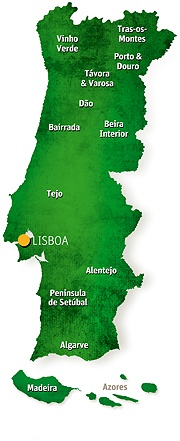
There’s also the option of putting it with a very fruity red wine or a very acidic white wine. There’s always a lot of options for combinations, not just based on the main ingredient, but on the other ingredients that the chef is using.’ And this is, for Vallet, one of the key purposes of Taste Portugal – getting people to take culinary risks and broaden their horizons. One grape that Vallet is keen for people to learn more about is the white grape Alvarinho which he describes as being like Chablis for the French or Riesling for the Germans – ‘I think that, in the next years, Alvarinho will become that for Portugal. I believe that this will really be the top of the top of whites.’ Produced in the northwestern region near Monção and Melgaço, the wine can be drunk really young – within six months to one year of bottling – or it can be left to ripen, even aged in oak. Some people even use it curtimenta, which is a special method of fermentation whereby the skins are left in the juice, making the grape more resistant to ageing. Vallet is convinced that Portuguese wine will become better known throughout Europe in the coming years. ‘Wines follow fashion, but also the “wine gurus”,’ he says. ‘There are so many people writing books about wine and vineyards and people follow their opinions. 20 years ago, the top ranking wines were always from France, Italy and Spain – no other wines stood a chance. But, in the last five or six years, Portuguese wines are increasingly being found in the top lists. The quality is improving.’ But this then comes back to the problem of quantity. ‘The more you produce, the lower the quality. If there are too many grapes on a plant, they don’t have such good taste. Everything is related. If you start to produce more to sell more, the quality decreases. If you get a good result in a wine magazine, and accordingly increase production, you won’t have the same good result the next year. The producers therefore need to find the balance between quality and quantity.’
Asked about his own personal favourite wine, Vallet says it’s an impossible question. ‘I cannot pick one favourite wine, because it depends on the food and the mood. But if I had to select one, it would be a wine that I could drink every day; a good quality wine so that I wouldn’t get bored of drinking the same thing after three or four days.’ In Vila Joya, they try to select a number of just such wines; wines that could be bought by the customer for between €8 and €12 in the supermarket. ‘Below €8, it’s hard to find a good enough one, but within this range, there are some good wines that you could enjoy every day.’ Wines from the Doura region, for example, such as the light, crispy and fresh whites Viosinho and Rabigato, could be drunk every day, combined with many simple dishes. And the red wines Tinta Roriz and Touriga Nacional, from the same region, again combine with everything, from pasta to grilled beef or veal. ‘There’s a lot of possibility with those wines,’ Vallet recommends.
A question he is often asked by incredulous French tourists is whether he has become more of a fan of Portuguese wine now than of French. ‘Am I allowed not to answer?’ Vallet laughs. ‘French people have a strange way of looking at wine. They think that they are producing the greatest wine, and that nobody can be producing good things around them. This is completely strange.’
Vallet, of course, realised long ago that other countries’ wines can be good too. It’s simply not possible to compare the grapes of one country with those of another. ‘If I have to think, for example, about what I will drink tonight, if I have in front of me two bottles, one French, one Portuguese, it will take me a long time to decide which one to drink. I will not pick the French first or the Portuguese first because I know that I have in front of me two really great wines. Basically, I think the best wine is the wine that’s coming from its home – taking the grape elsewhere won’t be as good. And sure, then those wines are the best wines in the world.’
For more information about Portuguese wine visit:
• www.wineanorak.com/portugals_wineregions