

Building places:
Style Icons
Much like its cuisine, Portuguese architecture offers a historical and cultural mélange, encompassing the best the world has to offer, delivered with a unique twist.

GALLERY


‘As modern Portuguese cities have expanded, there has been a revival in traditional folk architecture’
THE IBERIAN PENINSULA and landmass making up modern day Portugal has been a site of significant construction since the second millennium BC. As well as several scores of medieval castles, it is also home to the ruins of many a Roman villa and fort. It does, however, also have a catalogue of home grown styles, including the 16th century late Gothic Manueline architecture and the 18th century Baroque Johannine style. In more recent times, celebrated architects such as Alcino Soutinho, Álvaro Siza Vieira and Eduardo Souto de Moura have been reaping awards – including the Pritzker and Wolf Prizes – and building some exciting modern and contemporary structures, spanning bridges, pavilions, stations, functional buildings and private residential projects.
Let’s begin with Expo ’98, the world fair hosted by Lisbon to commemorate the 500th anniversary of celebrated Portuguese explorer Vasco da Gama's arrival in India in 1498. Built fully from scratch, every building on the site, including Álvaro Siza Vieira's pavilion, was pre-sold for after-Expo repurposing, thus avoiding post-event abandonment and dereliction. An extensive building programme included a new bridge across the river, a new Metro line, and a new multi-modal train, metro, bus and taxi terminal, the Gare do Oriente, designed by Spanish architect Santiago Calatrava. The bridge, named after Vasco da Gama, is recognisable worldwide and symbolises the glory of Portuguese cultural and engineering prowess, past and present. Cable-stayed, with H shaped pylons and flanked by viaducts, it spans the Tagus River. With a length of 17.2km it was, at the time of building, the longest in Europe. The project cost €897million and was split into four parts, each one built by a different company, supervised by an overarching independent consortium. 3,300 people worked simultaneously on the project, which took 18 months of preparation and 18 months of construction. It was financed through a build-operate-transfer (BOT) system established by the private consortium Lusoponte, who now receive the first 40 years of tolls. The bridge has a life expectancy of 120 years and has been designed to withstand the impact of a 30,000 tonne ship travelling at 12 knots, wind speeds of 250 km/h and earthquakes of up to 4.5 times stronger than the historical one which shook Lisbon in 1755 and is estimated to have reached 8.7 on the Richter scale.
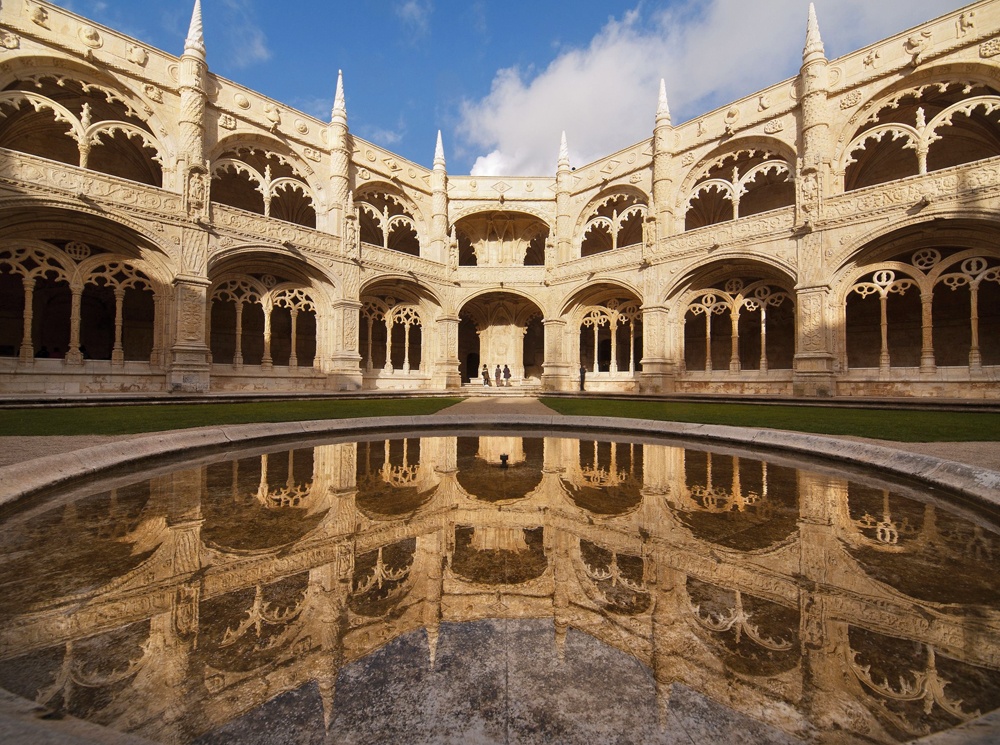
Perhaps the most outstanding example of Manueline architecture is the Mosteiro dos Jerónimos (Hieronymites Monastery), also in Lisbon, and built to fulfill a promise made by King Manuel (1469-1521), regarding the safe return of Vasco da Gama, whose tomb now lies within. Born out of several existing styles, this synthesis, which in turn became something unique – a suitable master style for the seat of a flourishing empire – embodies the intricate and rich designs of the Golden Age of Discoveries, including plentiful nautical symbols. This maritime influence is visible throughout the Hieronymites Monastery, both in the church and the vaulted cloisters. The original architect, Diogo de Boitaca, worked with calcário de lioz, a local gold-coloured limestone. Now a UNESCO World Heritage Site, the church also boasts an elaborate 32 metre high, 12 metre wide entrance, designed by the Spanish architect João de Castilho, and crowned by various figures in carved niches, surrounding a statue of Henry the Navigator, which stands on a pedestal. This portal, although not even the main door to the church, provides a popular backdrop for wedding photographs. Inside, the voyages of discovery are further celebrated by pillars carved to resemble giant palms, fanning out into a ceiling resembling a jungle canopy. The building of the whole complex, which began in 1501 and continued for nearly a century, under the directorship of numerous architects, was funded by the spices brought back from da Gama’s voyage, which were subject to the Vintena da Pimenta, a 5% tax on commerce from Africa and the Orient, equivalent to 70kg of gold per year.
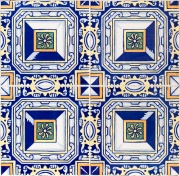
The monastery’s refectory contains an example of another highly characteristic element of Portuguese architecture, again strongly influenced by the colonies, namely the azulejo, or painted, tin-glazed, ceramic tilework, first introduced to Portugal by the Moors, and an integral part of Portuguese culture for the last five centuries. Azulejos are found both on the interior and exterior of churches, palaces, houses, schools, restaurants, bars and stations; on the walls, floors and ceilings. Often painted with tales of major historical events, the tiles also perform a specific function of temperature regulation. Until the mid 16th century, azulejos were largely imported, mostly from Spain, but in latter times, the Portuguese learnt the craft for themselves, and, when King Pedro II stopped all imports of the tiles between 1687 and 1698, the workshop of Gabriel del Barco readily took over the production. Around the same time, blue and white tiles from Delft in the Netherlands were introduced and this style was integrated into the craft. The late 17th and early 18th centuries became the ‘Golden Age of the Azulejo’ and mass production was necessary to meet demand, both internally, and in the Portuguese colony of Brazil. Great narrative panels were replaced by simpler to produce, repetitive Rococo patterns and panels depicting gallant and pastoral themes. Good examples might be seen at the Palace of the Dukes de Mesquitela in Carnide (Lisbon) and the Corredor das Mangas in the Queluz National Palace. 20th century azulejos saw the influence of Art Nouveau and Art Deco, an example of the latter decorating the vestibule of the São Bento railway station in Porto. With 20,000 tiles depicting historical themes, this grand work by Jorge Colaço is a noteworthy achievement.
The 44-year-long reign of King João V (1689-1750) was a period when a great many iconic architectural masterpieces were produced in Portugal as well. Thanks to gold from Brazil and the skills of hired foreign artists, such as Tuscan-born Nicolau Nasoni (1691-1773), who moved to Portugal in his early thirties and never again left, a Baroque Johannine style was derived. A particularly rich treasure trove for architecture of this style is found in the churches of Porto, one especially worthy example being the Clérigos Church, whose tall bell tower, the Torre dos Clérigos, can be seen from various points across the city, making it a recognisable and iconic symbol. The church was built by Nasoni for the Brotherhood of the Clérigos (Clergy) between 1732 and the 1750s. The church’s main façade is heavily decorated with Baroque motifs, in particular garlands and shells, and has an indented broken pediment, based on an early 17th century Roman scheme. The central frieze above the windows depicts symbols of worship and an incense boat. The church was one of the first in Portugal to adopt a latterly typical elliptical floor plan. The famous tower stands at 75.6 metres high, and its design was inspired by Tuscan campaniles. It has 240 steps ascending six floors. Nasoni, who himself entered the Clérigos Brotherhood, is buried in the crypt.
Staying in Porto, but coming into the 20th century, the 1950s saw the birth of a distinctive architectural style from the so-called Porto School. This influenced a number of native architects, including Alcino Soutinho (1930-2013), Álvaro Siza Vieira (born 1933) and Eduardo Souto de Moura (born 1952). The latter is responsible, amongst other things, for the striking cultural centre in Viana do Castelo, described by some as a ‘low-level Pompidou Centre with the colour taken out’. He also designed the Casa das Historias at the Paula Rego Museum in Cascais, with its two pyramid shaped towers and red-coloured concrete reinterpreting typical regional architecture in an innovative way.
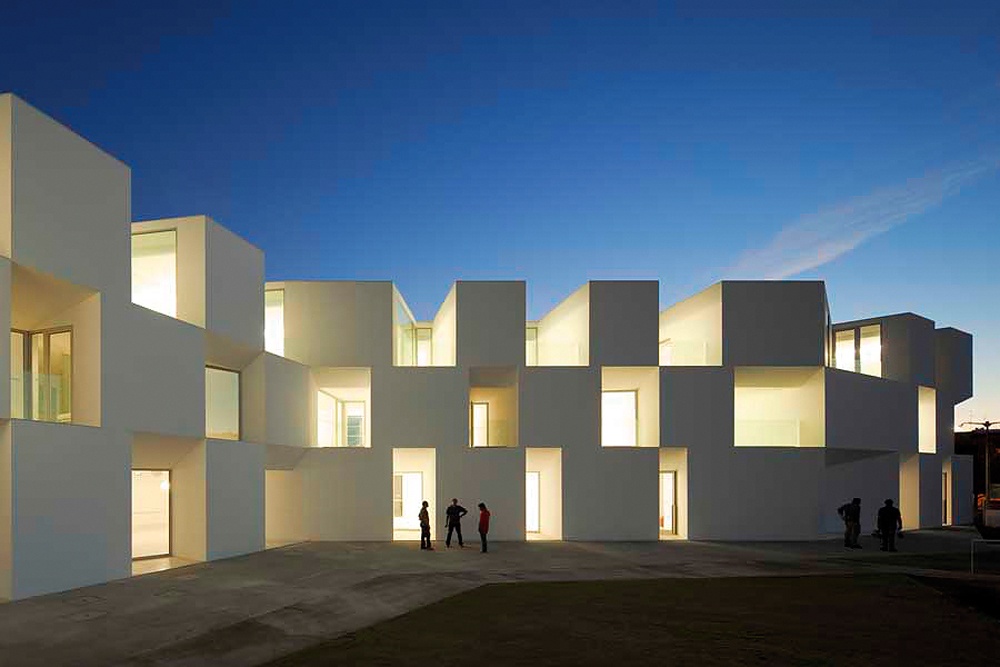
Other recent architectural starships include the likewise bright red Casa das Artes in Miranda do Corvo (designed by Future Architecture Thinking (FAT), 2013), whose dynamic sloping roofs follow the line of the village houses whilst also echoing the irregular geometries of the nearby Lousã Mountains, thus setting up a striking contrast between urban and rural landscapes; the Vodafone headquarters building in Porto (conceived by Barbosa & Guimarães, 2009), whose design concept was to reflect the slogan VODAFONE LIFE, LIFE IN MOTION; and the bright white pile of cubes forming the nursing home in Alcácer do Sal (designed by Aires Mateus architects, 2010), which brings modernist architecture to social causes, with 38 geometric bedrooms set into the hillside of a medieval settlement topped by a Moorish castle built on the ruins of sixth century Roman fortifications.
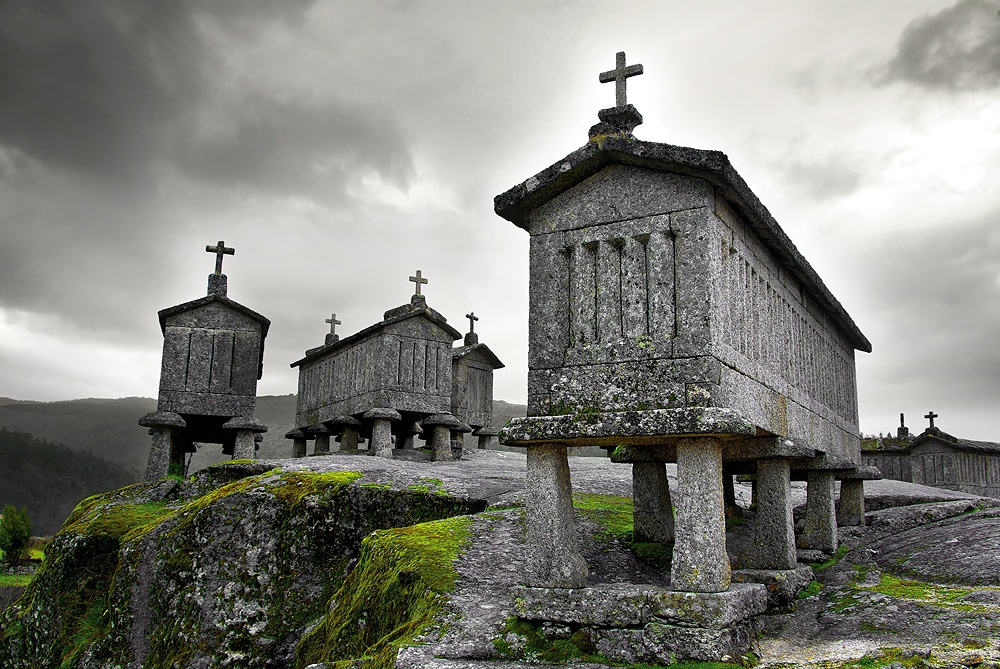
A couple of further contemporary, socially orientated projects include Rem Koolhaas’s vast white Casa da Música (2005), a flagship part of Porto’s urban regeneration programme, and House II in Aroeira (by ARX Portugal Architects, designed by José and Nuno Mateus), part of the series of urbanisation projects for Aroeira's golf course. As modern Portuguese cities have expanded, there has been a revival of interest in traditional domestic and folk architecture, and thus typical religious buildings, such as the white churches of the Algarve and the coastal towers of the Lisbon area have been celebrated anew. The Torre de Belém, for example, is probably Lisbon's most famous architectural icon. Located on the riverbank to the west of the Hieronymites Monastery, it was built as a lighthouse and defensive fortress by the well-known Manueline architect, Francisco de Arruda, around 1515.
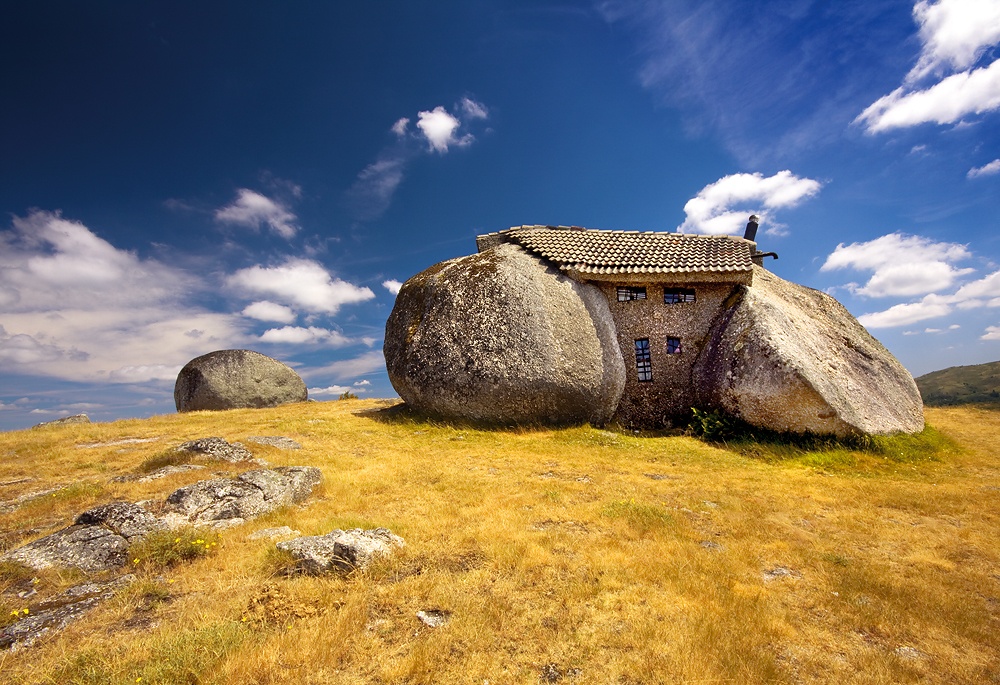
Another very well-known architectural image in Portugal, or, rather, perhaps the best known architectural export of the country, is the Casa de Mateus. Often attributed to Nasoni, this country house dates to around 1740 and owes its current fame to its appearance on the label for bottles of Mateus Rosé, one of Portugal’s biggest wine exports. A particular ‘architectural’ peculiarity comes in the shape of the Casa de Uma Só Telha (‘the house with only one tile’) in Monsanto, Beira Baixa. Widely considered to be the ‘most Portuguese’ village in the country, its houses are hewn into and moulded around the large grey boulders of granite outcrops, with the roof of this one particular specimen being formed from just one single rock.
And whilst Monsanto might carry the title of the ‘most Portuguese’ village, it is perhaps Guimarães, which might be designated the ‘most Portuguese’ city, or, rather, the best showcase of Portuguese city architecture across the centuries. European Capital of Culture in 2012, this historic town is associated with the emergence of the Portuguese national identity in the 12th century. Exceptionally well-preserved, it still comprises recognisable elements from its early years as a medieval settlement, with a castle which in part still stands, right through to the modern city of today, offering a typology of building styles and a catalogue of the development of Portuguese architecture.
According to online digital lifestyle magazine, HiConsumption, Portuguese design seems to be among the fastest growing in the current market and shows no signs of slowing down its progressive movement. With current evidence of recent architectural constructs and a strong tradition of drawing on multicultural influences and creating new and invigorated styles, I see no reason whatsoever why this claim shouldn’t prove to be true.