Rebel Kid
ANTONIO LOPES:
Sommelier of the Year
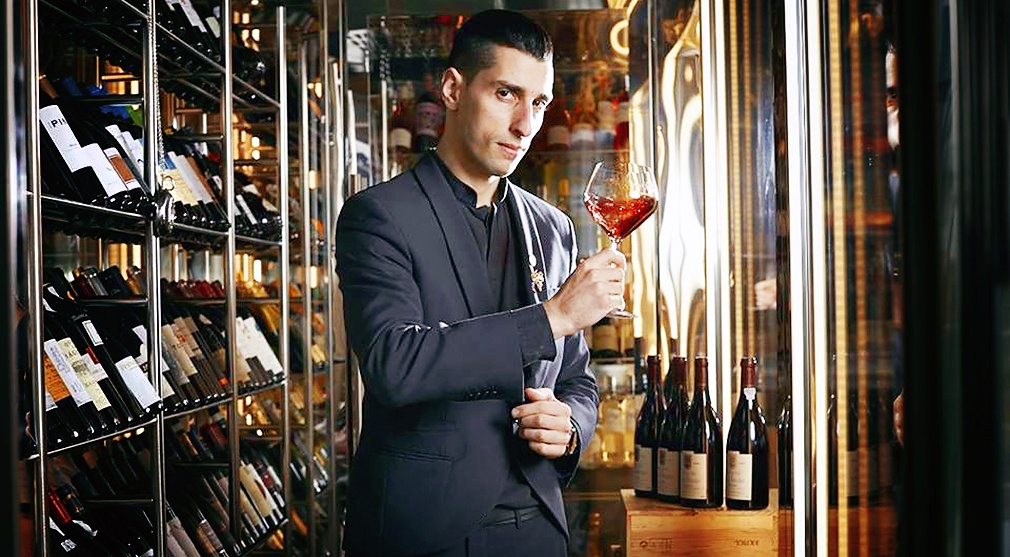
TASTE PORTUGAL is incredibly proud of its bad-boy-turned-good sommelier, Antonio Lopes, who has just won the Revista Wine: A Essência do Vinho Sommelier of the Year Award. But Lopes himself is modest, keen to promote the names of his colleagues across Portugal.


‘When I die, if I know 0.1% of the wine in the world, I will probably be the person who knows the most about wine’
‘MY INTEREST IN wine began back in 2008 when I was working at the Vila Vita resort in the Algarve. I started as the assistant of one of the sommeliers, Paulo Duarte, and he passed his passion on to me,’ explains TASTE PORTUGAL sommelier, Antonio Lopes, who has just been awarded the prestigious Sommelier of the Year Award from Revista Wine: A Essência do Vinho.
‘My family produces wine for auto-consumption and that is one of the reasons I didn’t start liking wine earlier. I would not say the wine is bad, but it is not very drinkable,’ Lopes laughs. ‘I still cannot drink it. My father always insists, but I refuse, because that wine creates butterflies in my stomach!’
Are his parents proud of him now, working as Head Sommelier at CONRAD Algarve and travelling all over to promote Portuguese wine?
‘My parents are very proud of me now. I was always a rebel kid – I was always a troublemaker when I was young – so for them to see me in the position I’m in now, it’s rewarding. They believed in me. There were a lot of people who didn’t believe in me because of the way I was. So my parents are very proud of me, and proud of themselves, of course.’
Lopes trained in various places. After a year spent at the Gleneagles Hotel in Scotland, he went back to Portugal and completed his sommelier training there – bar a couple of classes, but it still counts – and clearly suffices. Moreover, as Lopes explains:
‘I think a sommelier training is a training you have to do every day. Every day you have to study, every day you have to taste, every day you have to inform yourself. I used to say that, when I die, if I know 0.1% of the wine in the world, I will probably be the person who knows the most about wine, because it’s a vast field.
‘And being a sommelier is not just about wine. It’s wine, it’s spirits, it’s water, you name it. And then we have to understand about food. And then we have to be psychologists to speak with the guests! It’s a little bit of everything. And you have to know about history because the guests will ask questions, and then you have to know about politicians for general conversation – you have to embrace a lot of fields.’
How important is knowing about food to Lopes? Does he build his wine lists around the menus on offer, or does he have a core list of wines that he believes work across the board?
‘The food is one of the most important things. When I build my wine list, I build it thinking about the guests and, of course, the food. First, I will marry the palate of the guests with the wine, and second, I will marry the food. The chef is very important to me. I always like to speak to the chef, I always like to listen to the chef, I always like to see what he has to say, because that gives me the tools to work with.’
So far, Lopes has worked in 11 hotels and three renowned restaurants. Asked where he’d really like to work in the future, his answer is immediate:
‘Alinea in Chicago and Diverxo in Madrid are two crazy restaurants – crazy in a good way – that are creating experiences. The way that they work, the way that the chefs cook, the way that they have the service, I think I would fit in there. I would love to work in Chicago, I would love to work in New York, probably also Miami, and Australia. But I love Portugal. But unfortunately in Portugal it is difficult to grow because it’s a very small country.’
Nevertheless, he remains loyal to his home country and convinced of the value of its wines.
‘The main thing about Portuguese wine is the differentiation, the diversity. The wines in Portugal are totally different from the wines all over the world. If you go to California, you can probably find a similarly profiled wine to the French; if you go to New Zealand, you can probably find a wine that is similar to something Spanish; but you’re never going to find a wine that is similar to a Portuguese one because we have a very specific microclimate, we have very specific soil, we have very specific weather, we have very specific indigenous grapes that are only blended in Portugal and if they’re blended in another soil they will taste completely different. For example, our alvarinho is completely different from the Spanish. Portuguese wines are remarkable in their difference. And another thing that makes a difference is the price. The price that you pay for a very high quality wine in Portugal is nothing comparing to the price that you pay for high quality wines elsewhere in the world.’
Do people in different countries respond to wine differently? Are there differences in people’s palates?
‘Well, when you are tasting wine, it’s not just the wine you are tasting, it’s everything around you. So if I am smelling, say, almonds in a wine, I’m smelling them because I know them, but if I say that to someone in Finland who has never tasted almonds, they cannot smell almonds in the wine, because they don’t know them. For them, different aromas will be easier to pick up on than for me, because I don’t know them so well. That’s why I don’t like too mention too many aromas in a wine, because I don’t know if the other people tasting will know them or not. So I just give some guidelines and let the other people open their minds and tell me what they are feeling and tasting.’
Aside from his original inspiration, Duarte, Lopes is also grateful to his bar chef, Eduardo Vicente, who taught him in school and for whom he has enduring respect. He also credits all the many winemakers he knows – especially Mario Sergio from Quinta das Bageiras, Joao Nicolau de Almeida from Ramos Pinto, Alvaro de Castro from Quinta da Pellada and Julio Bastos from Quinta Dona Maria. ‘Every time I speak to these people I learn new things. I used to say that when I go to a winery, I learn more in one day with them, having dinner and speaking with them, than from reading a book in three or four days. I have so many names I could mention, it’s difficult to pick just a few.’
A similarly impossible question to answer – ‘the question that everybody always asks me and the question that sommeliers always try to avoid’ – is whether or not he has a personal favourite wine. ‘It depends. When you are tasting a wine, it depends on your state of mind, it depends on your company, it depends on the food that you’re having, it depends on everything. There are many occasions when you will taste a wine and think it’s not very good and then you’ll taste it again another time and enjoy it.’
Upon being congratulated on his award, Lopes is gracious, grounded and modest:
‘I cannot be a hypocrite and say that it was my goal, because it was not my goal. I’m not really a believer, in terms of prizes. I don’t really say “Oh, I got the prize so I’m the best.” It’s a plus for me that I did, in terms of the projection of my career, but a contest is a contest, so it was what it was. Best sommelier for them doesn’t mean that I’m sommelier of the year, I’m just sommelier of the year for them – for that specific contest. It’s an honour, because I was among four very good sommeliers, and to be chosen as the best makes me proud – I was not expecting it at all. Of course it will open a lot of doors for me. There are a lot of very good sommeliers in Portugal who aren’t spoken about though, including Ricardo Morais, Nelson Marreiros and Sergio Marques. I won this contest, but that is all. I’m not the best.’
What Lopes is apparently equally proud of is his role as sommelier with TASTE PORTUGAL:
‘For me, it’s a very big honour. It made me grow up a little bit more and it actually made me do what I was always telling people to do, which was to promote Portuguese wines. When they invited me to take on the role I think I thought for just ten minutes and then said yes. I’m very proud and I’m thankful to the organisers, Persia and Justin, because they made it possible.’
Congratulations, Antonio! For us, you will always be Best Sommelier!