Bottling it up
Stripping the Cork
The habitat for native species and food stuff for Alentejo balk pigs, cork is also essential for the Portuguese wine industry - but it takes a long time to cultivate.

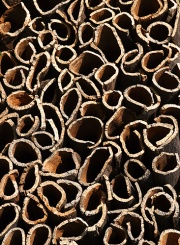
‘Half of all the world’s cork comes from Portugal – most of that from the Alentejo’
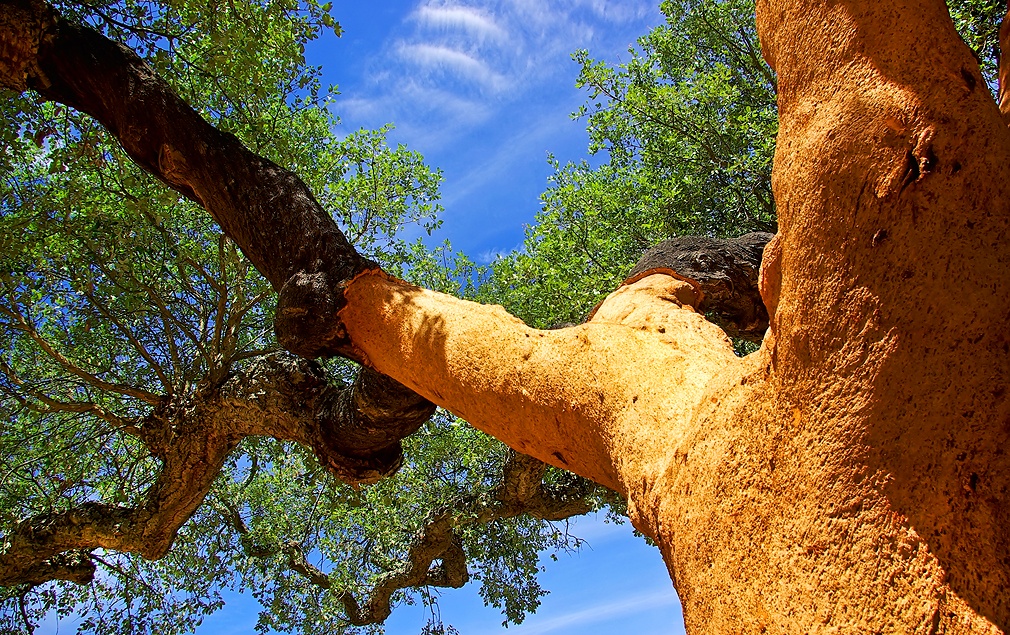
CORK IS THE bark of a type of oak, quercus suber. Half of all the world’s cork comes from Portugal – most of that from the Alentejo. This bark can be stripped from the tree (once every nine years) without damaging the tree itself. Cork has a cellular structure that contains a high proportion of air (which is why cork floats), and an elasticity that makes it highly resilient. You can compress cork and watch it spring back to its original size when you release the pressure.
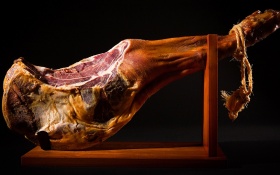
Cork oaks are grown in widely spaced forests in central and southern Portugal, and provide a habitat for many different birds and animals. They also provide much of the food for the Alentejan porco preto (black pig), which loves nothing more than the acorns that fall in the autumn.
A cork oak is not ready to have its first harvest of cork taken till it is 20 to 25 years old. It really is a tree you plant not for yourself, or for your children, as one grower in the Alentejo told us, but for your grandchildren and their children after them. Skilled men climb the trees (it is not considered a job for women as there might be a danger people on the ground could see up their skirts!) and make a vertical cut down the bark. Then they lever it away from the tree in as large a piece as possible. Smaller pieces fetch less money. It dries on the ground for a few months, then is taken to the cork factories to be boiled to kill any remaining wildlife. The corks are punched out of the sheets, bleached or otherwise treated, graded on appearance, bagged and sold.
This is an extract from The Wine & Food Lover’s Guide to Portugal, published by Inn House Publishing. Reproduced with kind permission of the authors.
Look out for The Wine & Food Lover's Guide to Porto & Gaia, due to be published before Christmas 2014