



Portuguese Salt Cod:
Beloved Bacalhau
It is said that there exist some 365 recipes for bacalhau – one for each day of the year – but actually there are even more: maybe in the region of 600-700 would be a more accurate estimate.

‘The most prized is still the bacalhau de cura amarela, dried in the traditional way in the open air’
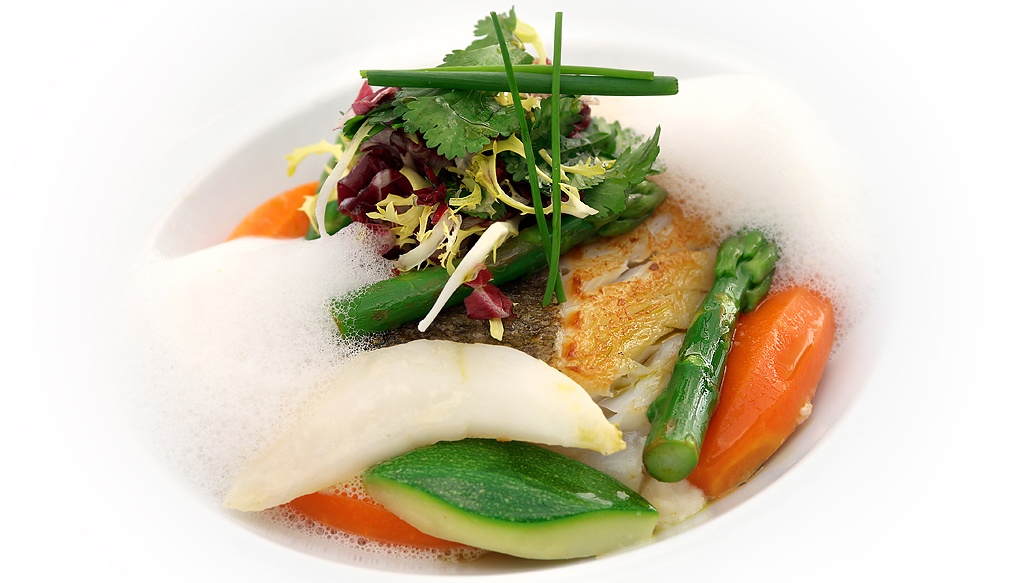
IT WAS TRADITIONAL to dry octopus as well as cod for the long sea voyages, and for consumption inland, and the taste has stuck, especially in remoter inland areas. But dried salt cod (bacalhau) has stuck most firmly. Salt cod is on the menu by the sea as well as inland, delicately presented in modern restaurants upon its bed of wilted spinach, chunkily prepared in countless well-loved ways in local restaurants everywhere.
Once cheap, it is now expensive, and eaten at home for special occasions. The Portuguese did a deal to fish for cod in English waters in 1353, and moved on in the early 16th century to the ‘Terra dos Bacalhaus’ (Newfoundland). With cod fishing now banned there, the fish is sourced nowadays ready-salted in Norway, Iceland and Denmark, and brought to Portugal for drying.
Once upon a time bacalhau was home-made. Twenty years ago, from March to September, you could still see cod drying commercially on racks or hurdles all down the Portuguese coast. Nowadays almost all drying is done in controlled factory conditions indoors. The most prized and the most expensive is still the bacalhau de cura amarela, dried in the traditional way in the open air, mainly around the city of Aveiro.
Bacalhau has a slightly chewy aspect and a dangerous, gamey taste that some foreigners find difficult to acquire. The Portuguese love nothing better than a big fat chunk of bacalhau. First encounters are easier with dishes in which it is flaked, sauced and mitigated by other ingredients. If you buy some to cook yourself, you may want to wrap it well, as its powerful aroma easily migrates to other food! Rinse it and soak it in frequent changes of cold water for 12 to 14 hours depending on the thickness – it should still be somewhat salty at the end. You may then want to scale and bone it, but without the skin it flakes apart. Once soaked, it cooks more or less like fresh fish.
This is an extract from The Wine & Food Lover’s Guide to Portugal, published by Inn House Publishing. Reproduced with kind permission of the authors.
Look out for The Wine & Food Lover's Guide to Porto & Gaia, due to be published before Christmas 2014.



