



Contributions to History
UNESCO
World Heritage Sites
Discover three of the 16 UNESCO World Heritage Sites worth a visit in Portugal

‘UNESCO seeks to encourage the identification, protection and preservation of cultural and natural heritage around the world considered to be of outstanding value to humanity’
ACCORDING TO ITS mission, laid out on its website, the United Nations Educational, Scientific and Cultural Organization (UNESCO) seeks to encourage the identification, protection and preservation of cultural and natural heritage around the world considered to be of outstanding value to humanity. This is further embodied in an international treaty called the Convention concerning the Protection of the World Cultural and Natural Heritage, adopted by UNESCO in 1972.
Portugal, with its patchwork history, coloured by the various traditions and cultures of those who travelled to the Peninsula and those whose land’s were conquered by its inhabitants, is proud to boast 16 sites, accorded UNESCO World Heritage status. These include historic centres, archaeological sites, cultural landscapes, natural parks and intangible heritage.
Three of the best sites are:
Historic Centre of Guimarães
Guimarães is a city in northern Portugal, in the district of Braga. It is an historical city that had an important role in the formation of Portugal. Settled in the 9th century, it was originally called Vimaranes.
The city is often referred to as the ‘birthplace of the Portuguese nationality’ or ‘the cradle city’ (Cidade Berço in Portuguese). One of the old towers of the city’s old wall is inscribed: Aqui nasceu Portugal (‘Portugal was born here’). The Vimaranenses are also called Conquistadores (the ‘Conquerors’) because of the historical heritage of the conquest initiated in Guimarães in the 12th century.
The well-preserved city reflects the progress of civic architecture from the Middle Ages right through to the 19th century. The specialist construction techniques developed here were applied across the globe in the Portuguese colonies, from Africa to the New World.
Guimarães, jointly with Maribor, Slovenia, was the European Capital of Culture in 2012.
Historic Centre of Porto
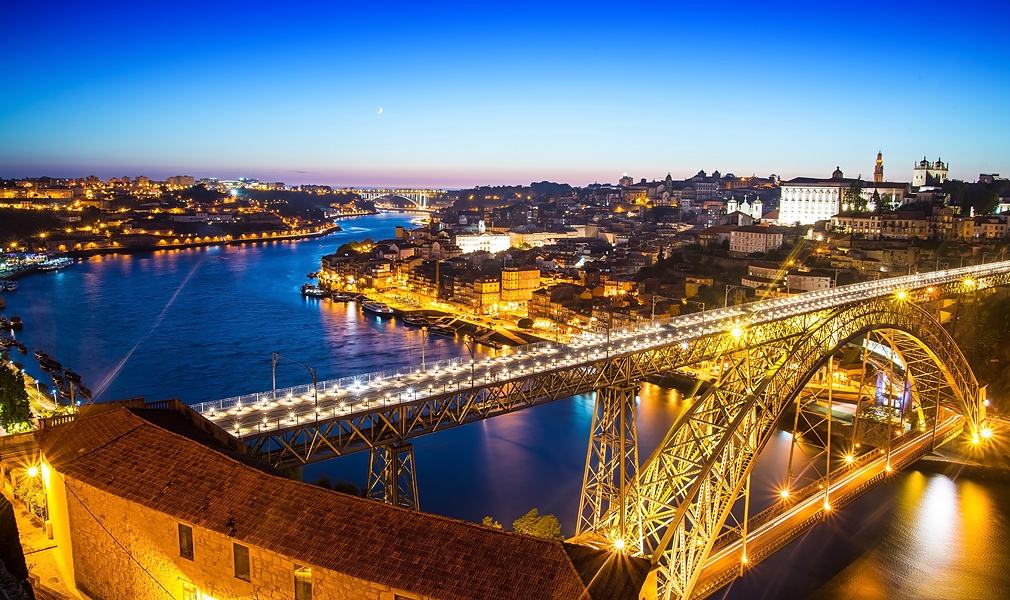
The history of Porto can be linked to maritime activity dating back to Roman times. The cathedral and the Clérigos Tower, symbols of the city, the grandeur of the buildings, the Baroque churches and the Neoclassical stock exchange all add up to an exceptional urban landscape. Add to this the cascading houses tumbling down to the River Douro and the waterfront area in Vila Nova de Gaia, and it is easy to see why Porto is a special city.
The UNESCO committee chose the city on the basis of cultural criterion (iv), considering that the site is of outstanding universal value as the urban fabric and its many historic buildings bear remarkable testimony to the development over the past thousand years of a European city that looks outward to the west for its cultural and commercial links.
Porto’s historic centre is a townscape of high aesthetic value, with evidence of urban development from the Roman, medieval, and Almadas periods. The rich and varied civil architecture expresses the cultural values of succeeding periods – Romanesque, Gothic, Renaissance, Baroque, neoclassical and modern.
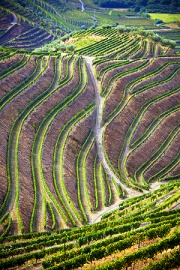
Alto Douro Wine Region With three World Heritage Sites recognised by UNESCO, there is no shortage of reasons to visit the Douro Valley, one of the most stunning landscapes in all of Portugal. The Alto Douro Wine Region is located upstream. Each of the vineyards can be accessed by winding roads that pattern the landscape. There has been evidence of wine production there for more than 2000 years, but it was only in 1756 that the Demarcated Douro Region was created and wine production in the region was organised and became internationally recognised. It was the first region in the world to be demarcated. Even today, the traditional harvest is still done by hand and the squashing of the grapes by foot, but the vinification processes used are of the latest development.
The Douro valley is now water-filled behind dams. Soil is almost non-existent and walls have been built to hold the manufactured ‘anthroposoil’, made by breaking up rocks, on the steep hillsides. The terraced vineyards, added row by row over the centuries, form the most dominant feature of the landscape. The long lines of continuous, regularly shaped terraces date mainly from the end of the 19th century when the Douro vineyards were rebuilt, following a Phylloxera attack.
The valley is home to the vines that produce the famous Port Wine.



