



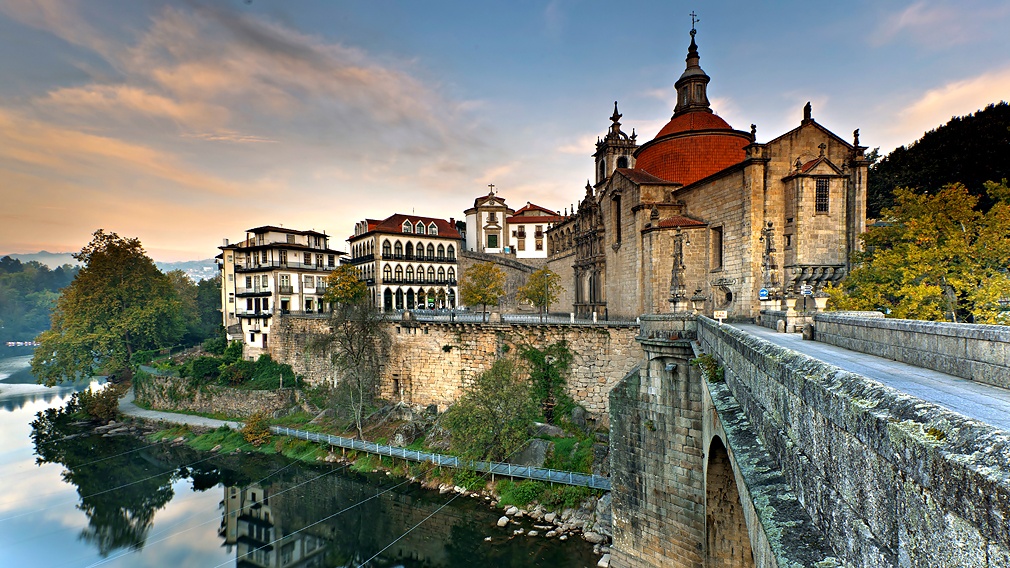
Regional architecture of the north
The Romanesque Route
The Romanesque Route is a tour covering 58 monuments located in the north of Portugal, near the rivers Tâmega, Sousa and part of the Douro

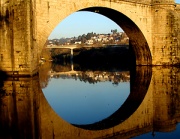
‘The region boasts many monasteries, churches and memorials, and they all illustrate an architectural style known as Romanesque, exemplified by its semi-circular arches’
ONE CAN DRAW a geographical triangle on to a map of northern Portugal, whose corners fall on three World Heritage Sites: Porto, Guimarães and the Douro Valley. This region and its architectural heritage are strongly linked to the beginnings of Portuguese nationality, since it was here that the noble families, who helped the first kings in the Christian Reconquest of what now forms modern day Portugal, lived.
The region boasts many monasteries, churches and memorials, bridges, castles and towers, and they all illustrate an architectural style known as Romanesque, exemplified by its semi-circular arches.
There are many such attractions to visit, but Turismo de Portugal suggest three routes, connecting to one other by road, following the river valleys. These are:
The Sousa Valley route, with 19 monuments;
The Tâmega Valley route, with 25 monuments;
and the Douro Valley route, roughly between Castelo de Paiva and Resende, with 14 monuments.
Not to be missed are a visit to Amarante, a beautiful city that straddles the river Tâmega. Highlights here are the Church of S. Gonçalo and the Amadeo de Souza-Cardoso Museum. Also take the time to enjoy the terraces by the river and sample the convent sweets. Another delicacy to sample and savour is the famous margaride pão-de-ló (sponge cake) in Felgueiras.



