



HERDADE DE MALHADINHA NOVA
The Marvels of the Alentejo
A family-run estate with vineyards, a winery, olive groves, black pigs, cows, a stud farm full of horses, a gourmet restaurant and a luxury spa hotel. What more could you want?

GALLERY
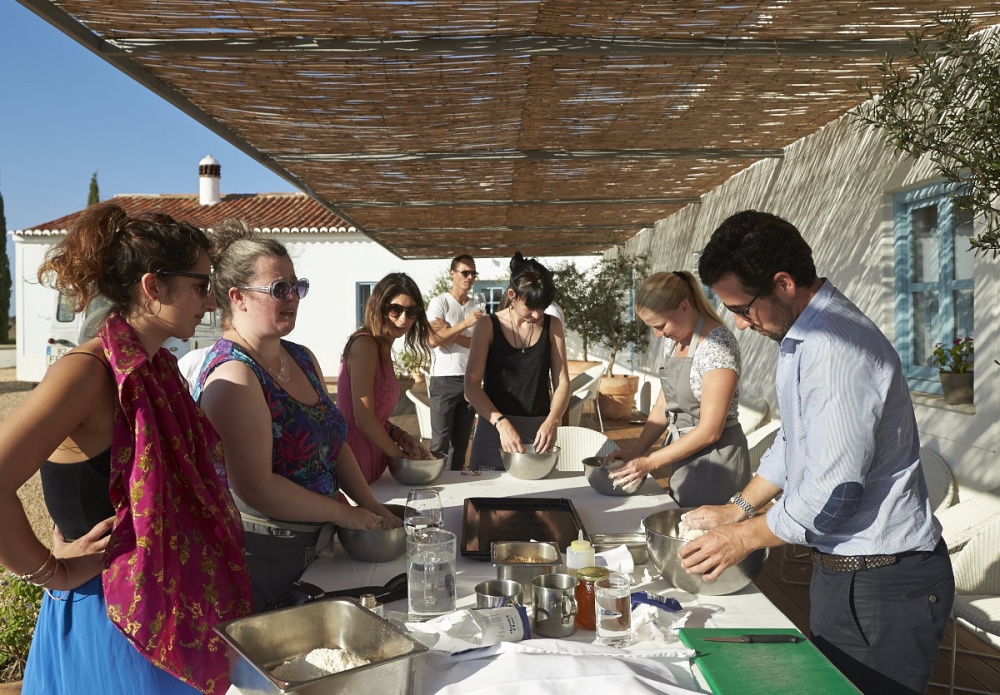




‘Kneading the dough, we could add ingredients according to our fancy: chouriço, morcel, honey, rosemary, chopped nuts…’
IN 1998, RITA and João Soares bought an abandoned estate in Albernoa, a small village in the heart of the Alentejo. In 2001, they began to plant vineyards. 2003 saw their first harvest, producing a red wine that went on to become a triple trophy winner at the International Wine Challenge in London. In 2008, they opened a hotel.
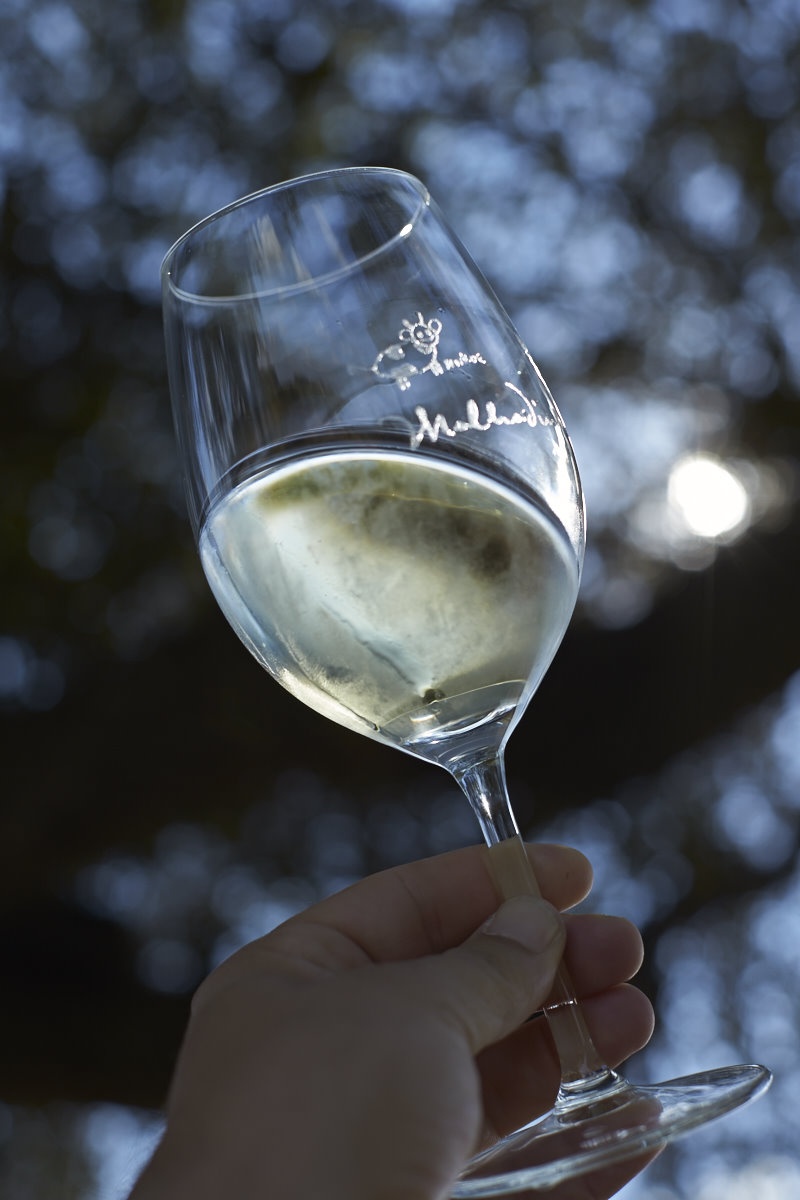
The hotel has just 10 rooms but offers 5* comfort and luxury in rustic style. ‘Even thought it’s rural, it has to be functional,’ Rita explains. And every detail has been attended to, from under-floor heating, to deep baths, to a turn-down service delivering handmade biscuits, to Philippe Starck lamps for reading in bed. The estate employs 35 staff, 20 of whom work in the hotel. Obviously, at harvest time, additional part-timers are taken on. Rita and João work alongside Paulo and Margaret (Paulo is Rita’s brother-in-law) with Nuno Gonzalez as their winemaker, Filipa Silva dealing with the commercial side of the wine business and Vitalina Santos, who produces fantastic traditional food, working with Joachim Koerper, the Michelin starred consulting chef, and Bruno Antunes, the resident chef, at the hotel’s gourmet restaurant. Even the two couples’ children play their part, with the labels for the wines and the logos for the estate being drawn by Melissa, 17; Francisca, 16; Matilde, 13; João, 10; Antonio, 6; Benedita, 3; and Mateus, 1 (ok, so not yet by Mateus, but his stardom is still to come!).
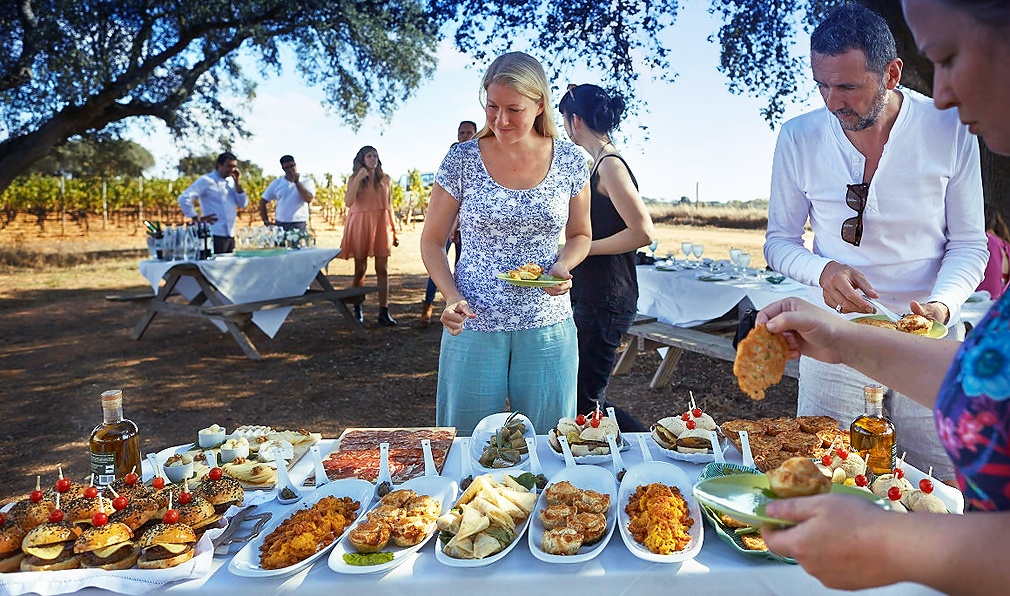
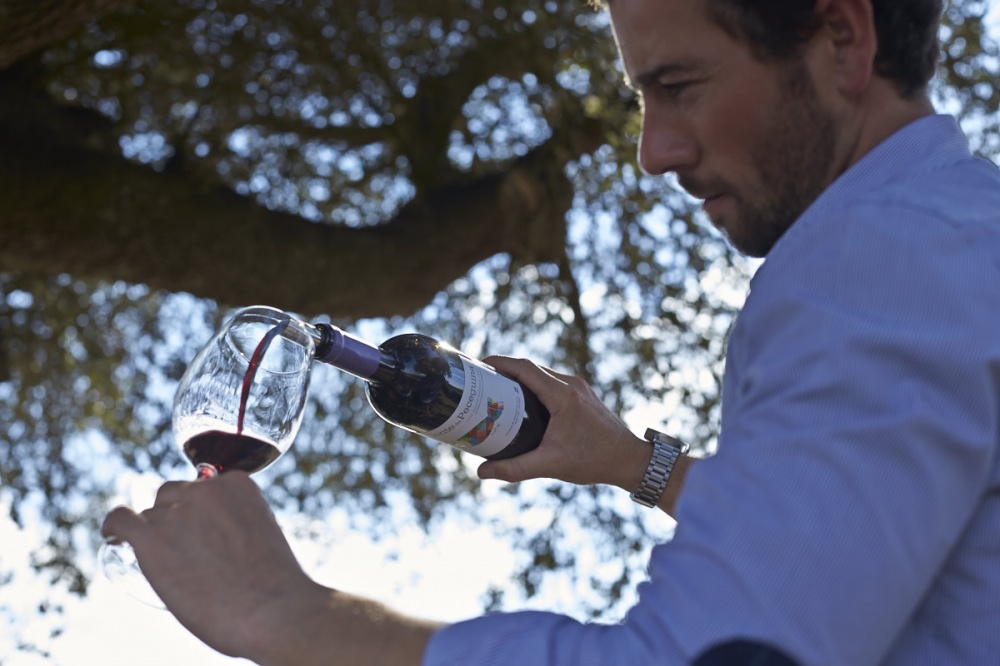
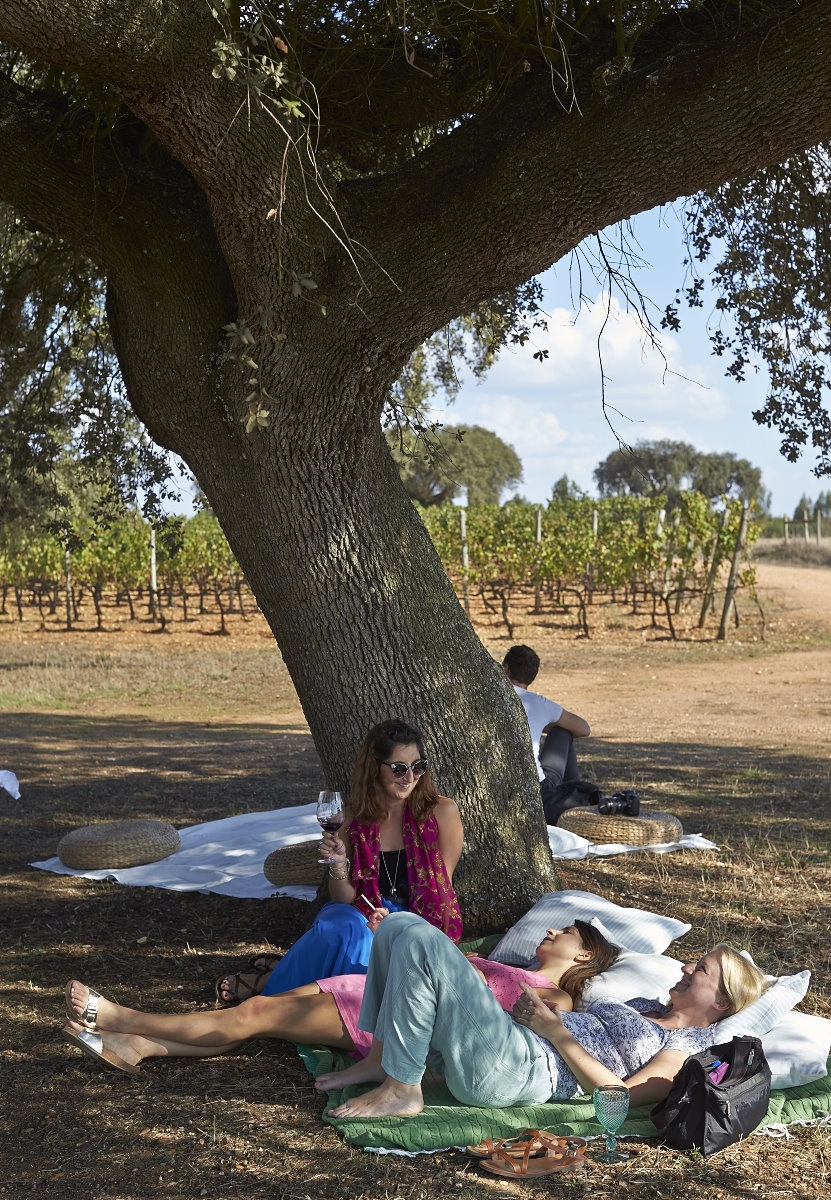
Our overnight stay at Malhadinha Nova was action-packed from start to finish. Greeted with an aperitif of Monte da Peceguina rosé 2013, we were then driven out to a stunning vantage point at the top of the vineyards, where pre-laid tables awaited us, offering a delicious picnic. Foods included veal tartare, mini burgers, scrambled egg with farinheira and chicken, codfish patties, mini chicken pies, olive madeleines, apple tart and cheeses, salamis and chouriço a plenty. Wine was also free-flowing.
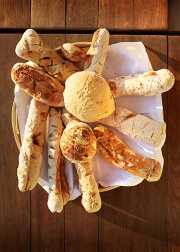
Next we were invited to join Vitalina in a bread-baking session. Kneading the dough, we could add ingredients according to our fancy: chouriço, morcel, honey, rosemary, chopped nuts… The trays were then loaded into a brick oven and baked for around 20 minutes. The result: fresh and sweet smelling loaves, maybe lacking in presentation (apart from the couple of pros in amongst our group), but certainly not in taste.
The best way to see the 450 hectares of land at Malhadinha Nova is by quad bike and so, as the sun set over the Alentejo plains, we headed off, slowly at first, but speeding up as we grew in confidence, to enjoy the vista and see the ruins of another building, which Rita and João have plans to turn into further accommodation – planning permission in the region is only granted where a building already stands. Our tour took us through the olive groves and sweet smelling thyme (a variety native only to the Alentejo and the Algarve) and past the estate’s black pigs, cows and handsome Lusitano horses – another facet of the estate is the breeding of these thoroughbreds, for the purposes of dressage, on the stud farm (coudelaria).
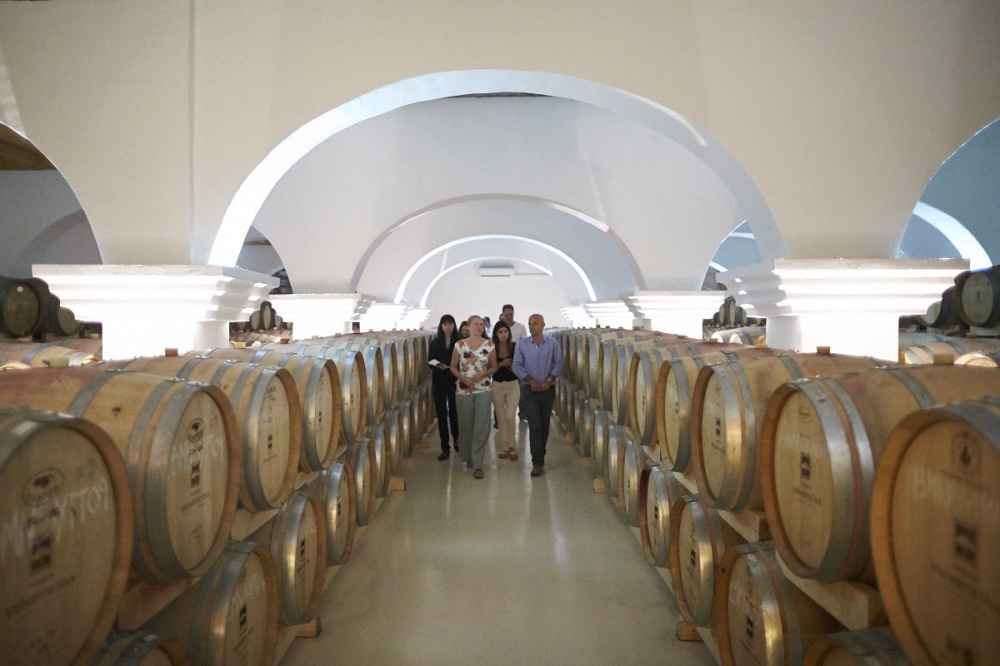
As night drew in, we arrived at the winery, where we were talked through the processes used – all gentle and all entirely reliant upon gravity – and told about the grapes, the barrels and the blends. The schistous soils, long dry Alentejan summers and gentle, well-drained slopes of the property combine with the carefully selected grape varieties – João’s family was in wine selling for 30 years prior to his purchasing Malhadinha – to produce wines of great quality, a significant achievement despite João’s modest claim that ‘it is impossible to make bad wine in Portugal’. Certainly no other winery has achieved such great success in such a short time.
Knowing what they wanted from the outset, João and Rita told Nuno, and have been working towards it ever since. ‘Maybe we’ll never get there,’ says Rita, ‘but at least we have a dream.’ They now grow Touriga Nacional, Aragonês, Alicante Bouschet, Tinta Miuda, Baga, Cabernet Sauvignon and Syrah (red) and Arinto, Roupeiro, Antão Vaz, Alvarinho, Verdelho, Viognier and Petit Manseng (white). With 2 hectares of land given over to each variety of grape, 6 tonnes of each are reaped per harvest, always by hand, and carried in small 12kg boxes to the winery. Currently production amounts to some 300,000 bottles per year, with exportation to 25 countries, including the UK. 70% of produce is sold within Portugal and a minimum of 600 bottles of each wine is kept in the cellar, with a strict rule of only being allowed to open six of each per year thereafter.
There are no fixed recipes for blending – it is done, each year, according to taste. In fact, no exact blend is ever remade, even if it has been a success. What worked well with one harvest cannot be matched with the next. Percentages will always vary. ‘The way we work,’ says Nuno, ‘it’s impossible to recreate a wine.’ The 550 barrels, with a capacity of 225 litres each, are made of French oak, which cost €700 each, as opposed to €450 for American oak – but the elegance makes this difference worthwhile. Barrels are used for just three years before being sold on and replaced. The top quality wines are always produced in 100% new barrels, while the older barrels are reused for the lesser quality wines. During our hour-long monovarietal blind tasting session, hosted in the trendy and sleek cellar, at a long wooden table amongst the barrels, we sampled a range of this year’s harvest, each at differing stages of fermentation.
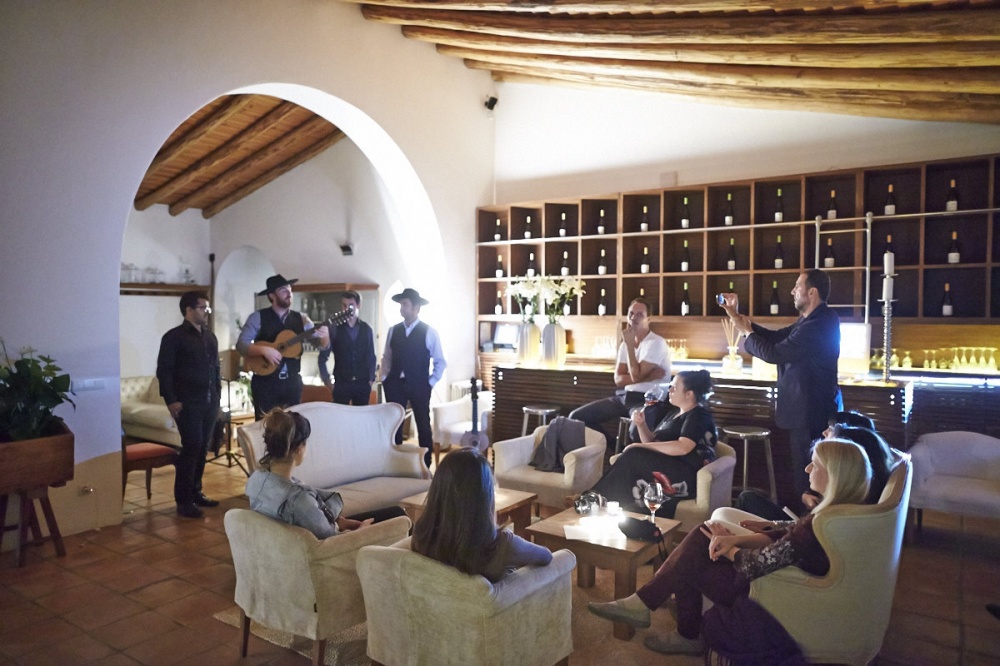
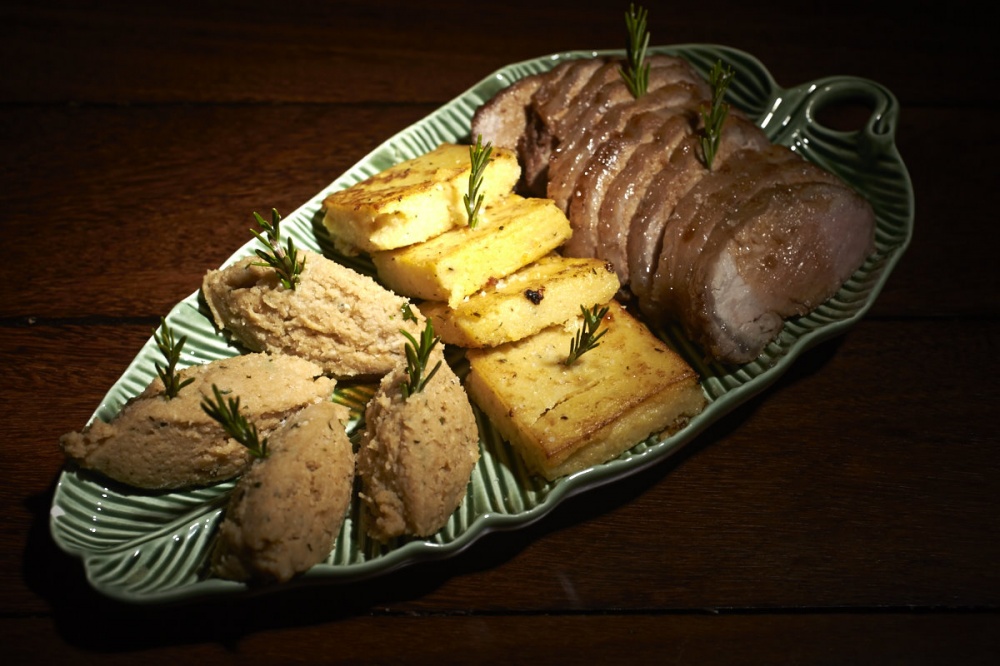
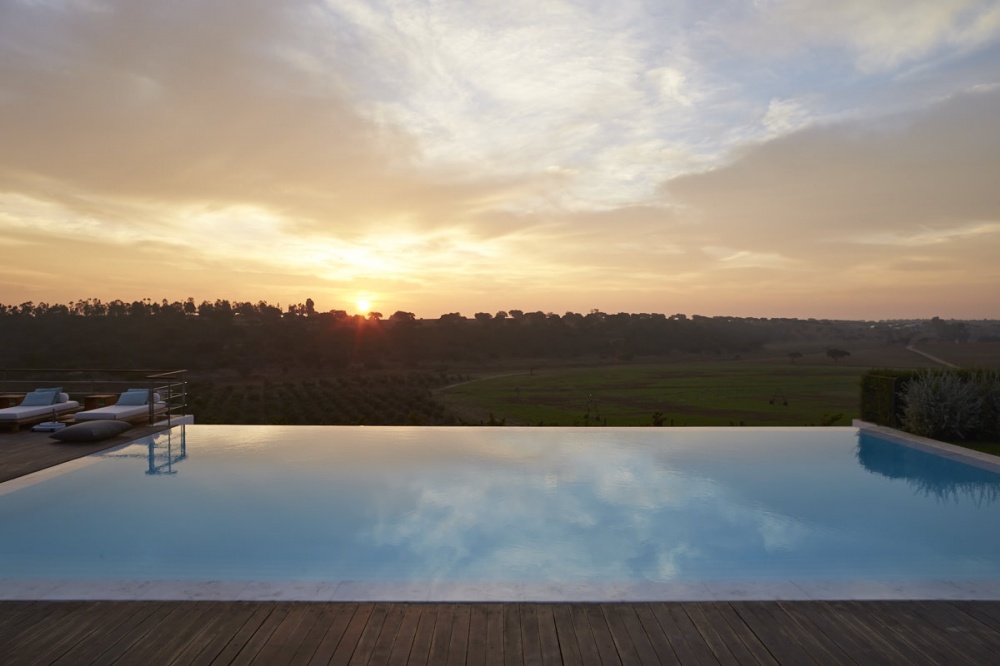
Returning to the ‘ranch’, dinner was preceded by a musical serenade from Pedro Mestre's viola campaniça, and then came a veritable feast, based on and showcasing numerous porco preto products. A pig is slaughtered once a month to provide farm-fresh meat and all our gourmet experts concurred they had never tasted such delicious pork anywhere else. The accompanying wine gave us an overview of some of the best vintages in the winery’s young history and everyone felt honoured to partake in the enjoyment of numerous of those precious annual sixes. At midnight, as Rita and João left to head back home to the Algarve (where they work on their wine distribution business during the week, returning to Malhadinha at the weekends), Taste Portugal’s happy and well-fed press trippers retired to their rooms to sleep soundly until breakfast-time next morning, when, watching the blood red sunrise over the treetops, above the infinity pool, and across the equally red-soiled plains, we enjoyed homemade cake, jams, fruits and freshly squeezed juices. This was one place, which it was very hard to leave.



