



PORTUGAL: NO LIMITS
Clam Picking and Oyster Tasting in the Ria Formosa
It’s one thing to visit the best restaurants across Portugal and back in London and to enjoy fresh clams and seafood, knowing their market value, appreciating their taste, but not understanding the hard work that goes into sourcing them.

GALLERY
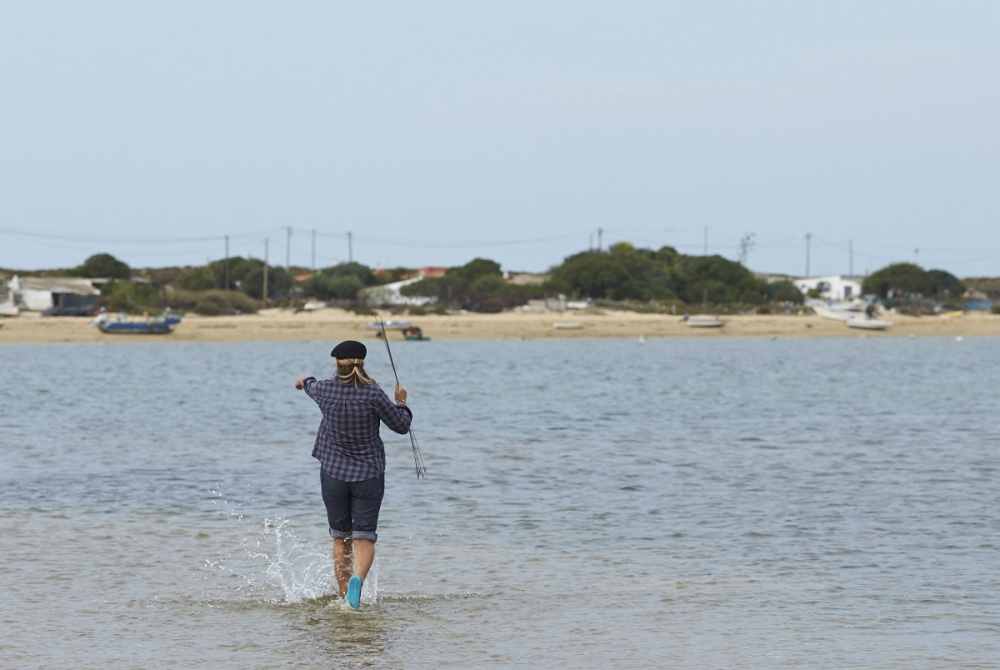
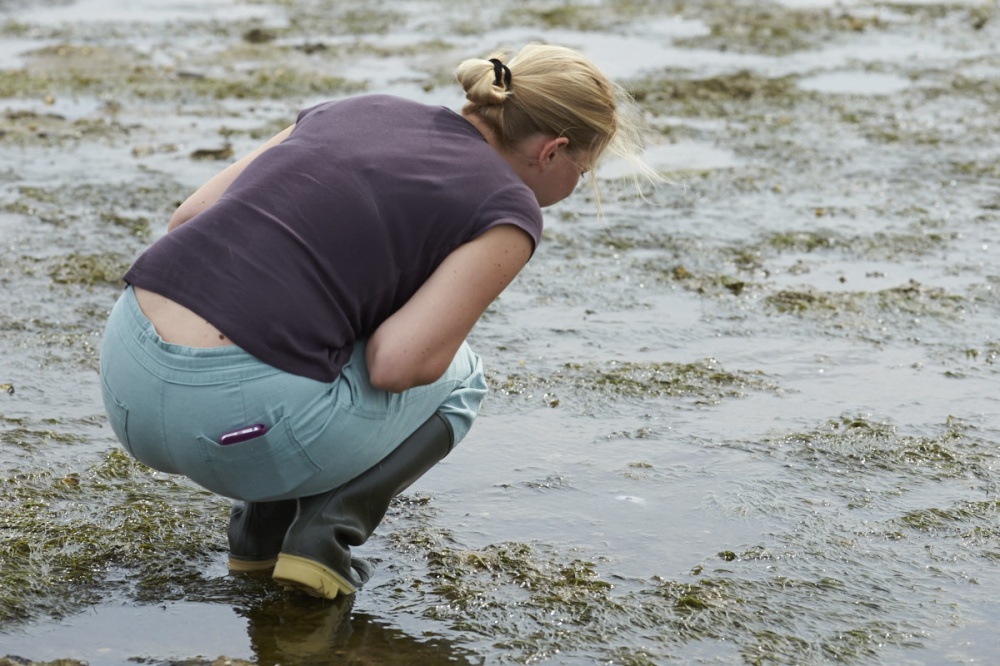
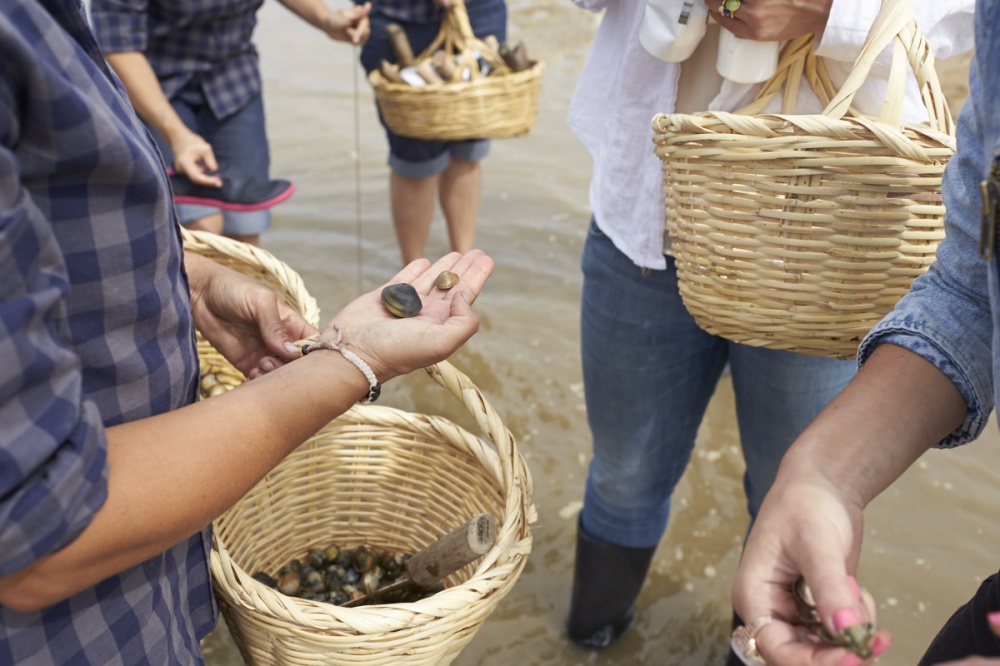
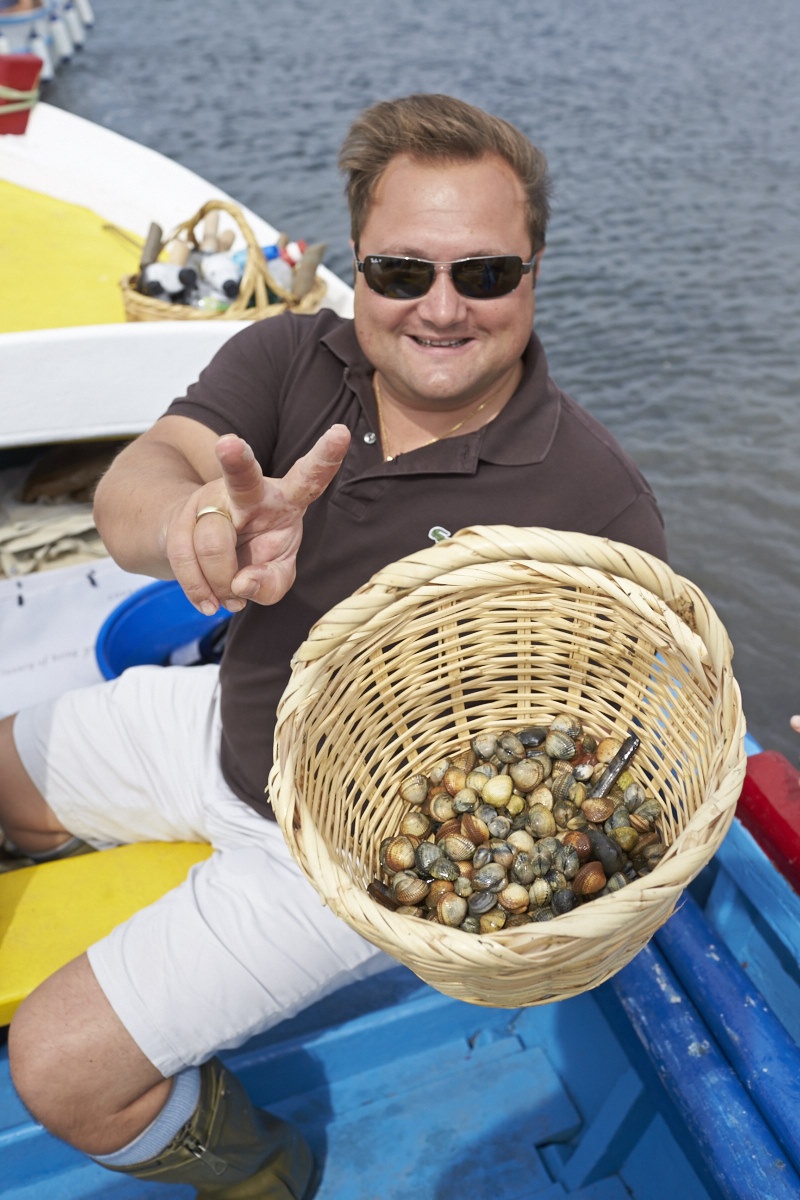
‘Once out on the sand, clad in wellies and wrapped up against the breeze, we were taught about the three methods for picking clams’
THE RIA FORMOSA – which means ‘beautiful river’ – is a unique coastal lagoon, home to a variety of different species of fauna and flora, constantly changing due to the continuous movement of winds, currents and tides. It was recently elected one of the Seven Natural Wonders of Portugal. Encompassing an area of about 18,000 hectares, it is protected from the sea by five barrier-islands and two peninsulas: the Peninsula of Cacela and the Peninsula of Ancão – known locally as the island of Faro. It is home to a number of endangered and rare species, including the Purple Swamphen, the chameleon, the seahorse and the Portuguese Water Dog.
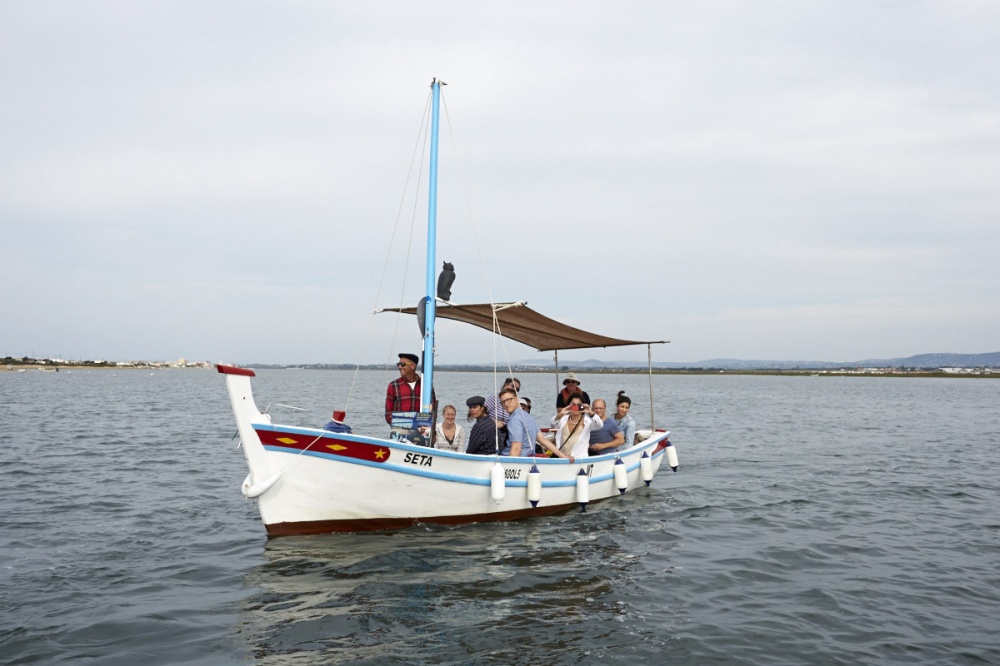
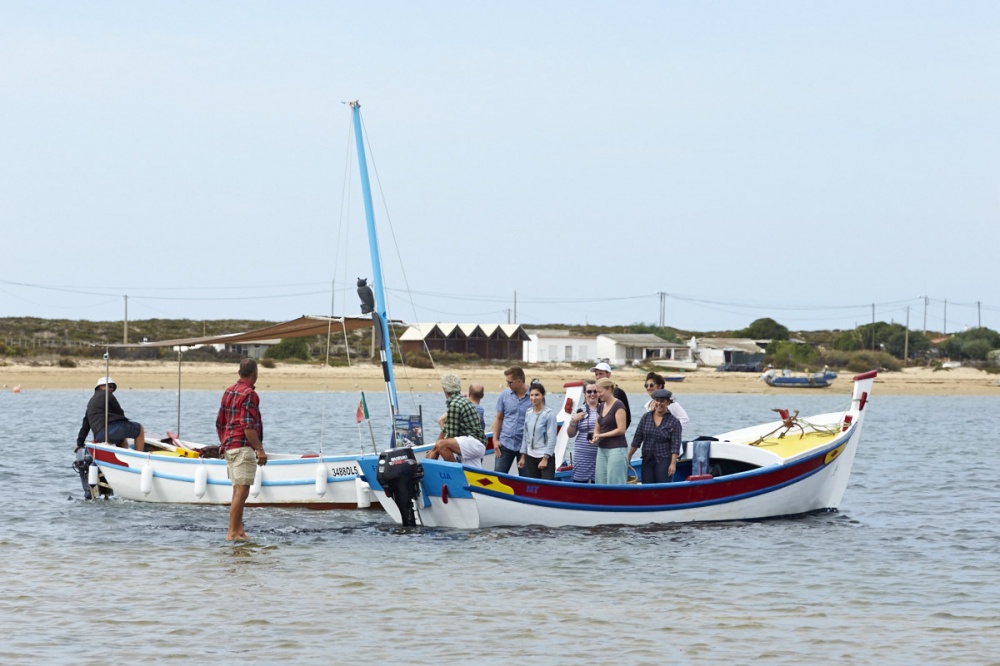
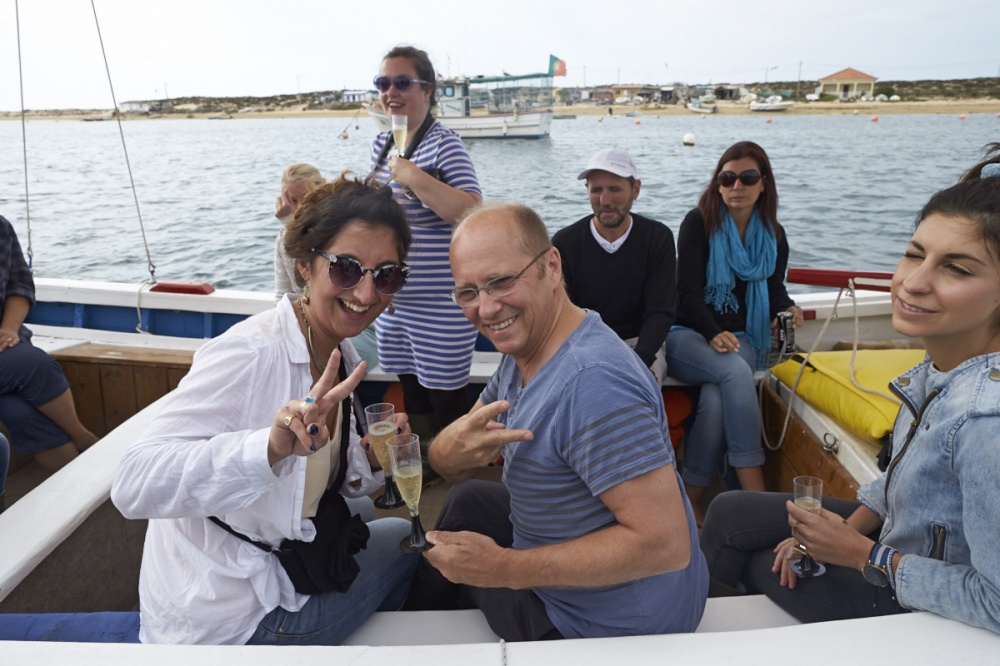
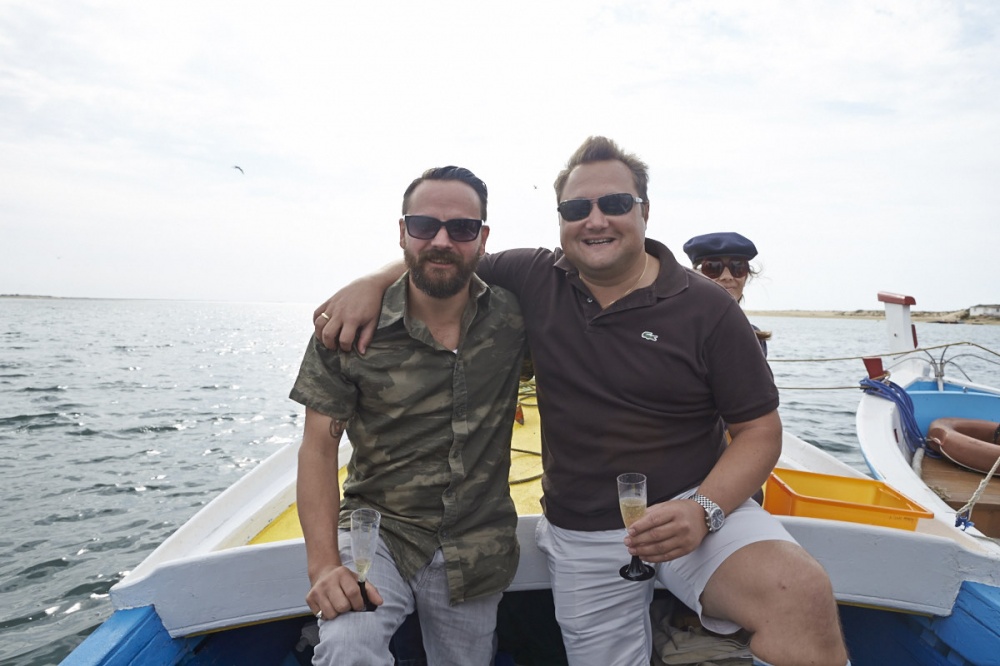
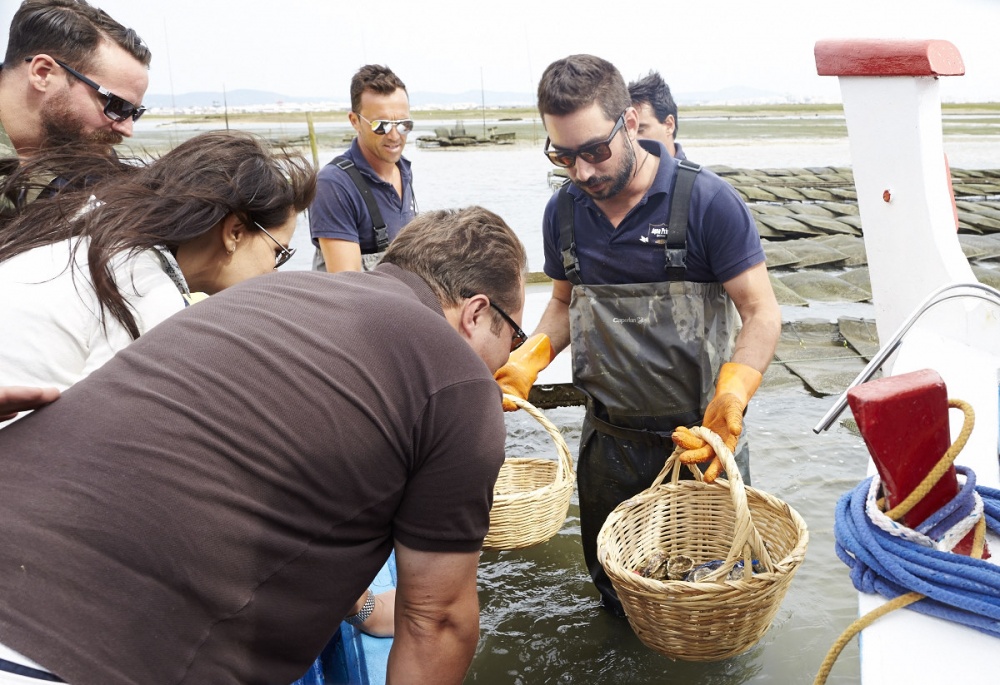
It was into this indeed very beautiful lagoon that Taste Portugal’s press trippers were taken on a convoy of fishing boats, to learn how to harvest clams and taste fresh oysters – and, of course, to drink some more wine.
Portugal No Limits (100 limites) is run by Cristina Nugas, along with her colleagues Monica and Sofia. As a girl, Cristina used to go out clam picking with her grandfather, so she has a lifetime of experience. Her company organises day trips for punters who wish to experience something extraordinary during their time in the Algarve. It also works together with the Conrad Algarve to serve the exclusive hotel’s guests.
Traditional fishing boats have long since been replaced by modern fibre ones but Portugal No Limits has managed to recover and restore a number of old ones to offer tourist these exciting opportunities. The clam picking day trips are typically accompanied by chefs, who afterwards give a demonstration of how to prepare the seafood in their kitchens We were accompanied by Hans Neuner and Florian Ruehlmann from Ocean, Pedro Bastos from Nutrifresco and Heinz Beck, Mike Bräutigam and the General Manager Joachim Hartl from the Conrad Algarve.
The lagoon is not easy to navigate as there are lots of sand and mud banks – it is very easy to get stuck, and, if you do get stuck with a heavy boat, you may have to wait for up to six hours for the tide to come in sufficiently to release you. Luckily, our fisherman guide and boatman, José, whose nickname is Ze da Praia, was something of an expert, who steered us deftly on our way.
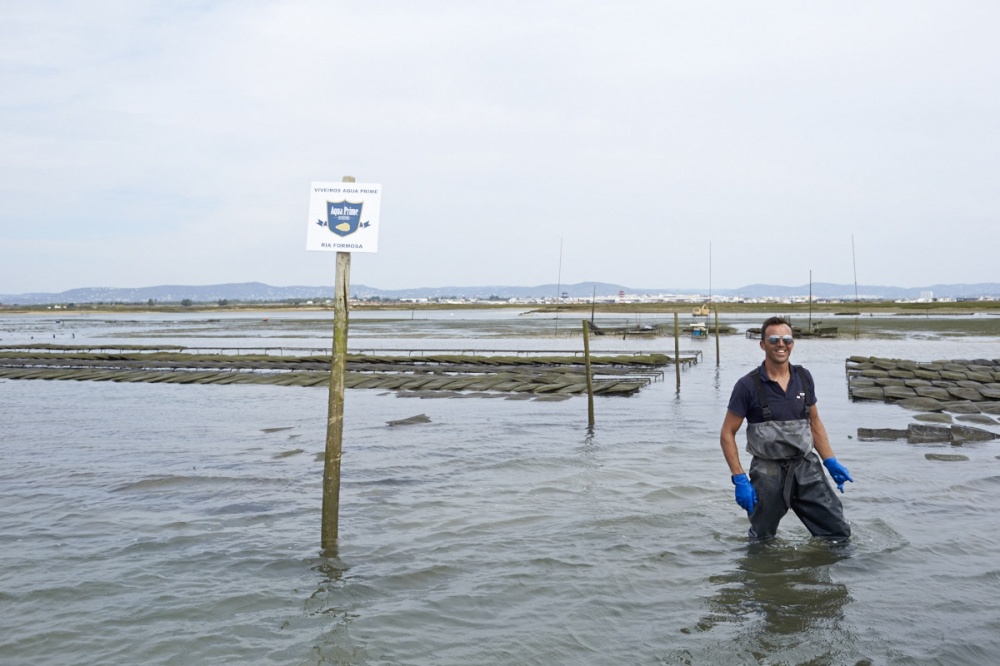
On either side of the lagoon, there are marked areas for clam picking. These are officially designated for professionals. The rest of the lagoon is, theoretically, fair game. These official zones are marked by poles and are like nurseries for the young shellfish. Baby clams are brought in, sometimes from the other areas, sometimes from further afield, and left for about six months to grow to a reputable size. They are then harvested at low tide in a window of about four hours. All kinds of shellfish are to be found – cockles also officially being clams, since this name encompasses all closed shellfish. Razor clams are a speciality of the lagoon.
There are four tides a day, affected by the moon. A spring tide is ideal for clam picking as the water then gets very low, exposing more of the sand banks. Arriving a little to early to disembark, we moored our boats and drank some sparkling wine to toast the day to come. Apparently 10-11am is the best time for tasting wine, as it is then that we have the cleanest, freshest palate. Any excuse!
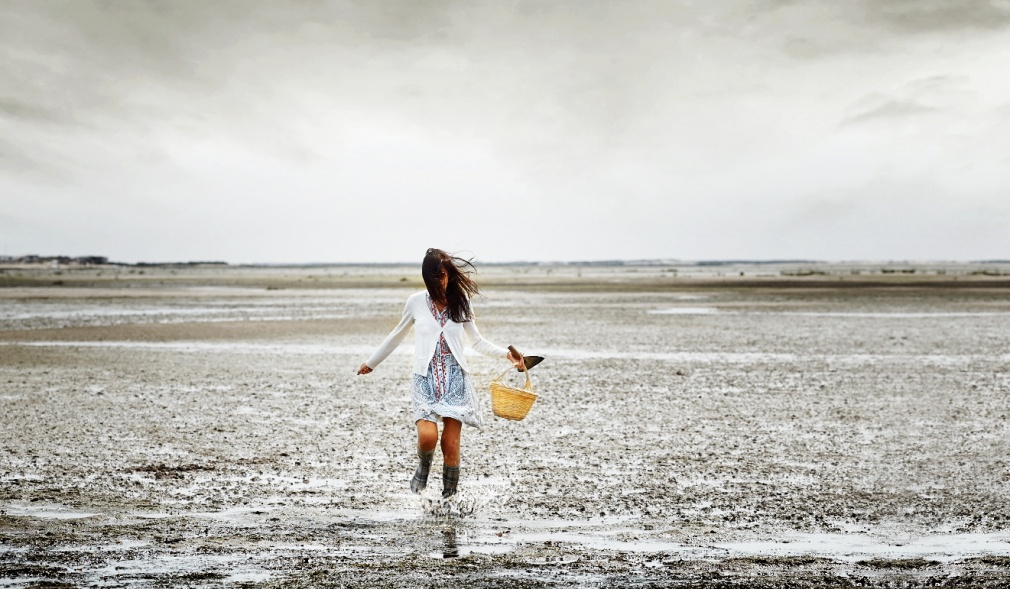
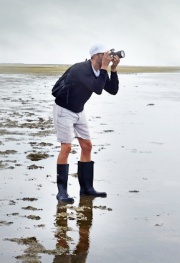
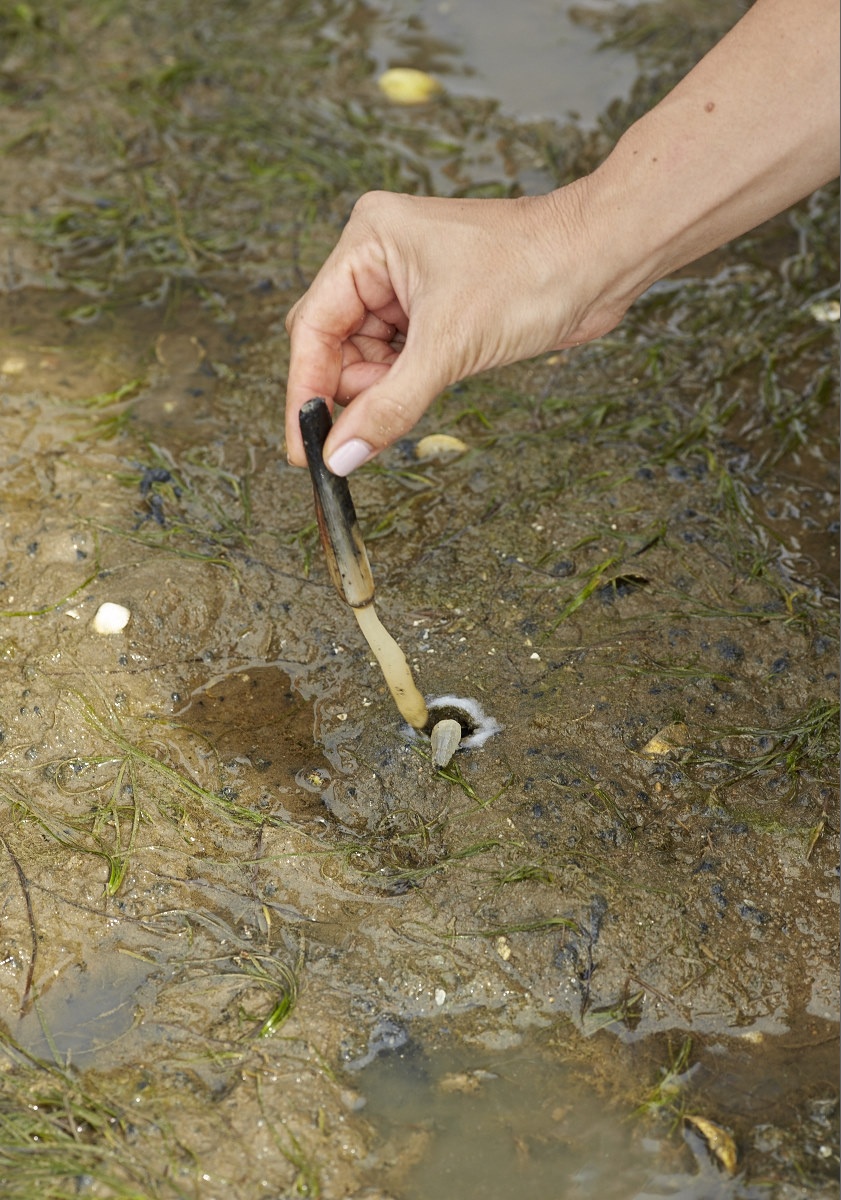
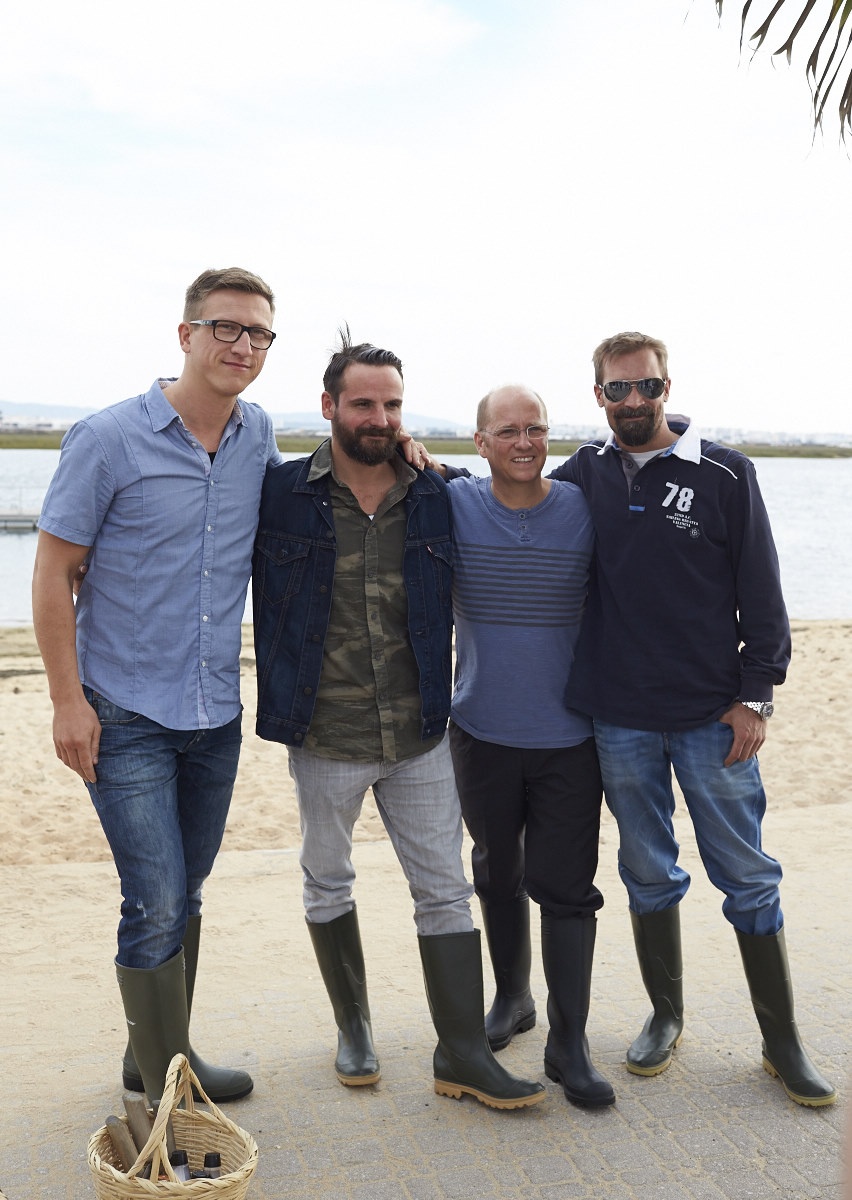
Once out on the sand, clad in wellies and wrapped up against the breeze, we were taught about the three methods for picking clams. The first task is to find holes in the sand in the shape of the figure eight. This means a clam is somewhere below the surface. There is then a choice of using either:
1) Harpoon – a long metal stick with a point on the end which can be thrust down the hole to retrieve the clam
2) Salt – sprinkled over the hole, it causes the clam to pop up for air, at which point it can be caught by hand and put into the basket
3) Scythe-like knife – standing bent and using the knife to cut towards you in the sand, you then sift through the loosened areas to pull out the clams
This was hard work and the fruits of our labour were few and far between. The weather was not ideal, since the wind makes the clams hide. Imagine every clam on your dinner plate being caught individually by hand – now their monetary value is clear! We nevertheless thoroughly enjoyed the experience, and those of us who did successfully catch something were very proud indeed.
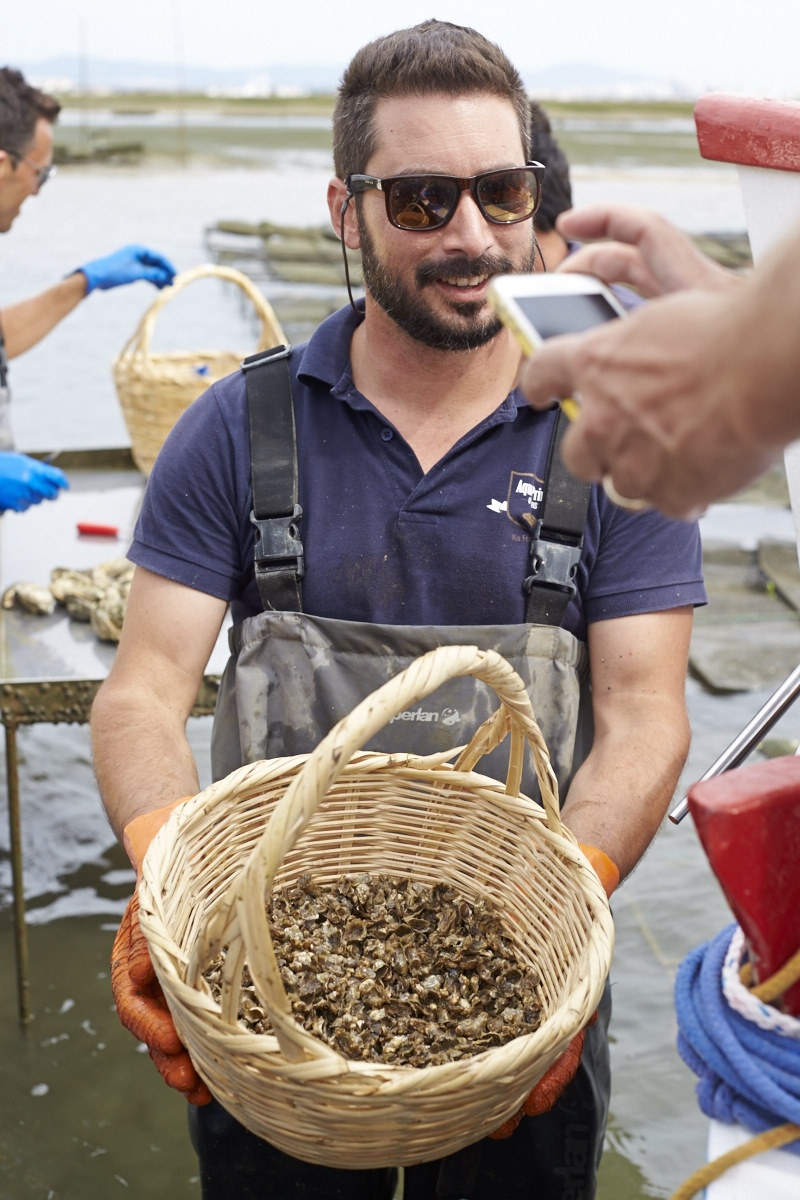
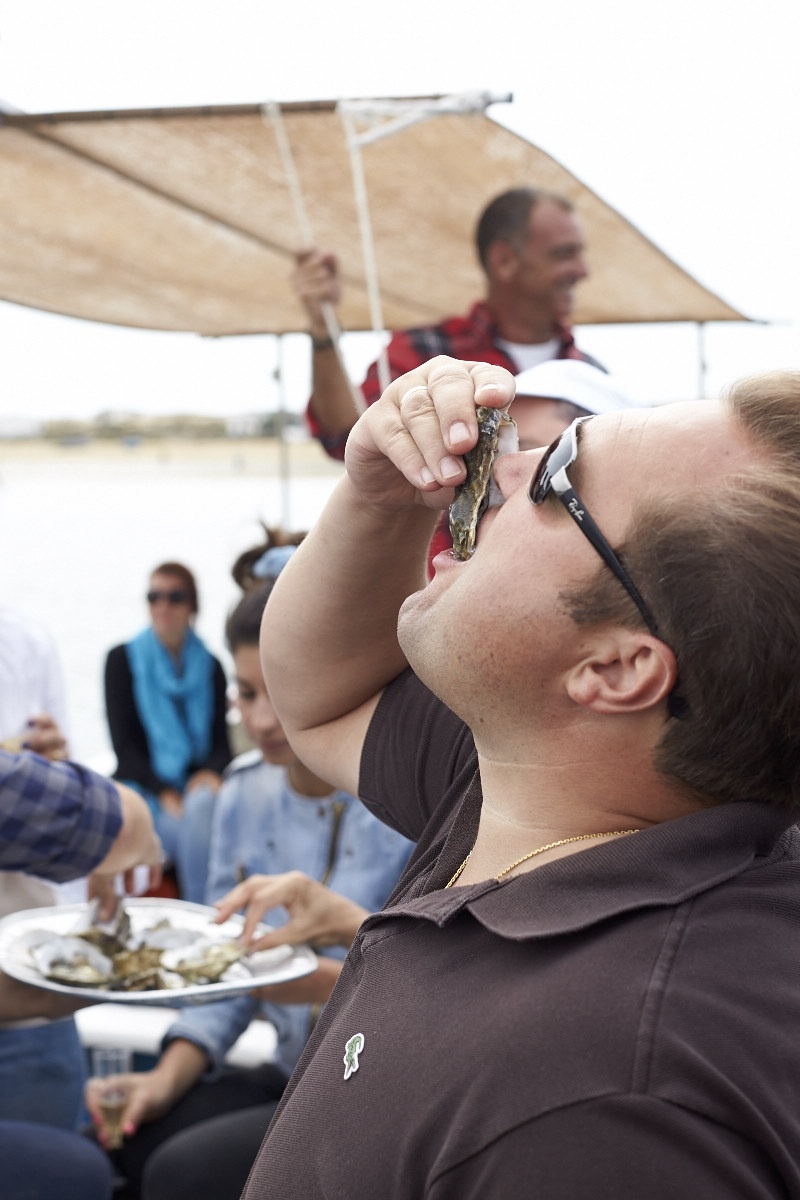
On the way back to dry land, our boats pulled up by some oyster nets, owned by the company Aqua Prime, who kindly offered us a delicious dégustation, accompanied by an unnamed young white wine from the Douro. Oysters, which are turned over each tide, and kept in bags and nets of varying sizes, grow more quickly in the waters of the Ria Formosa because of the high oxygen content. By comparison: they take just one year here as opposed to three in France. The quality is also superior, with these particular oysters having recently won first prize in a blind tasting event. Well, they certainly won our vote too.
After this fantastic appetiser, our boats returned us to shore, so that we could accompany our fellow voyagers from the Conrad Algarve and return to the flagship restaurant, Gusto, to participate in a culinary master class – with clams as the primary ingredient – with chef Heinz Beck.
N.B. Portugal No Limits and the Conrad Algarve also organise moonlight champagne dinners on the sand dunes, where the lagoon meets the Atlantic
Portugal No Limits additionally offer day trips swimming with Portuguese Water Dogs, a local breed that traditionally swam out to collect the fishing nets for fishermen, who couldn’t always swim



